
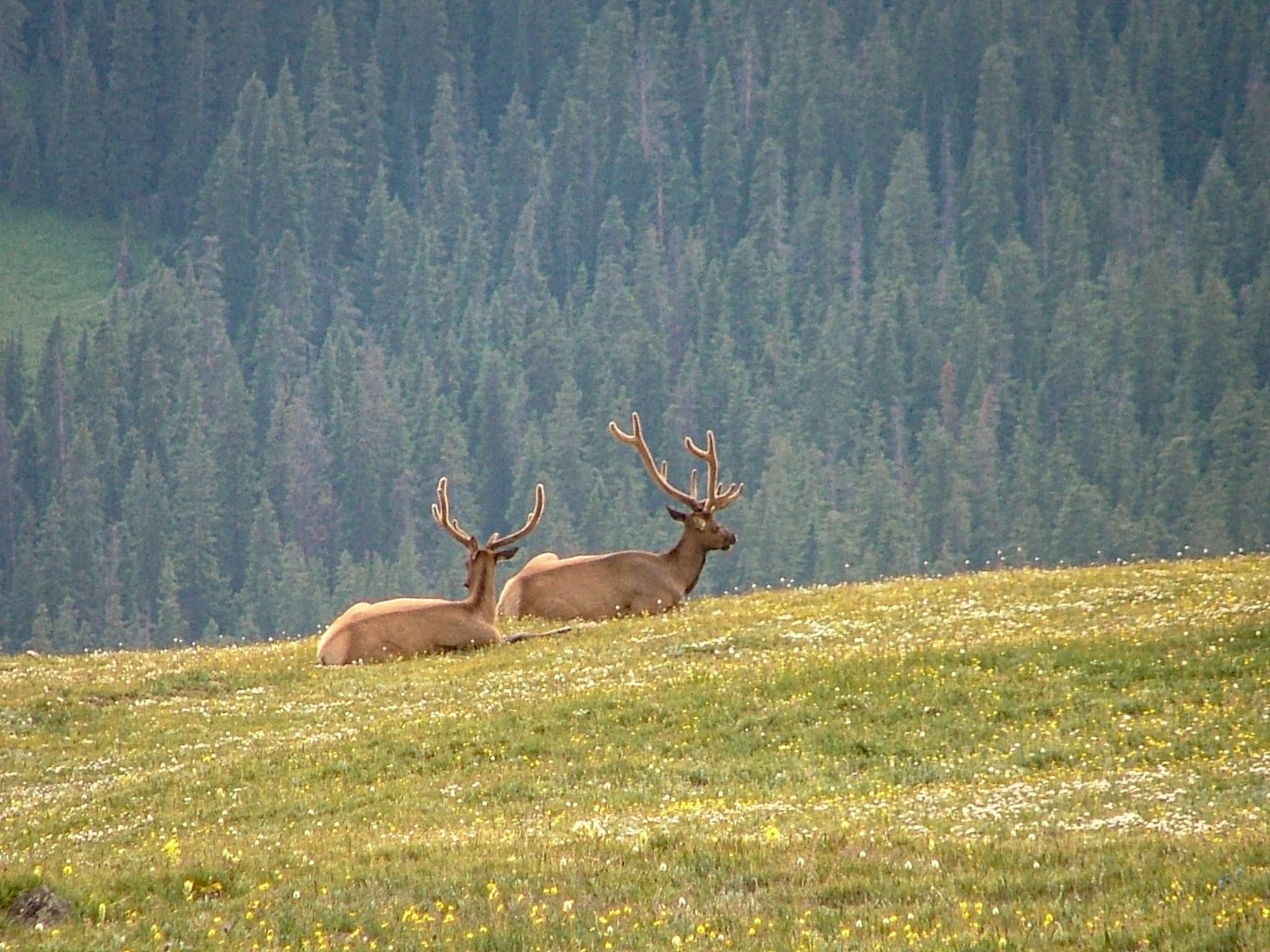
Autumn brings a spectacular wildlife phenomenon across North America – the elk rut. This annual mating season transforms normally docile bull elk into vocal, competitive suitors who bugle, spar, and showcase impressive displays of strength to win over females. For wildlife enthusiasts, photographers, and outdoor adventurers, witnessing the elk rut is an unforgettable experience that connects visitors to one of nature’s most dramatic rituals.
From the misty valleys of the Appalachians to the rugged landscapes of the Rockies, several U.S. national parks offer exceptional opportunities to observe this magnificent spectacle safely and responsibly. This guide explores the premier parks where visitors can experience the elk rut in all its wild glory, complete with tips on timing, viewing etiquette, and what makes each location unique.
Rocky Mountain National Park, Colorado
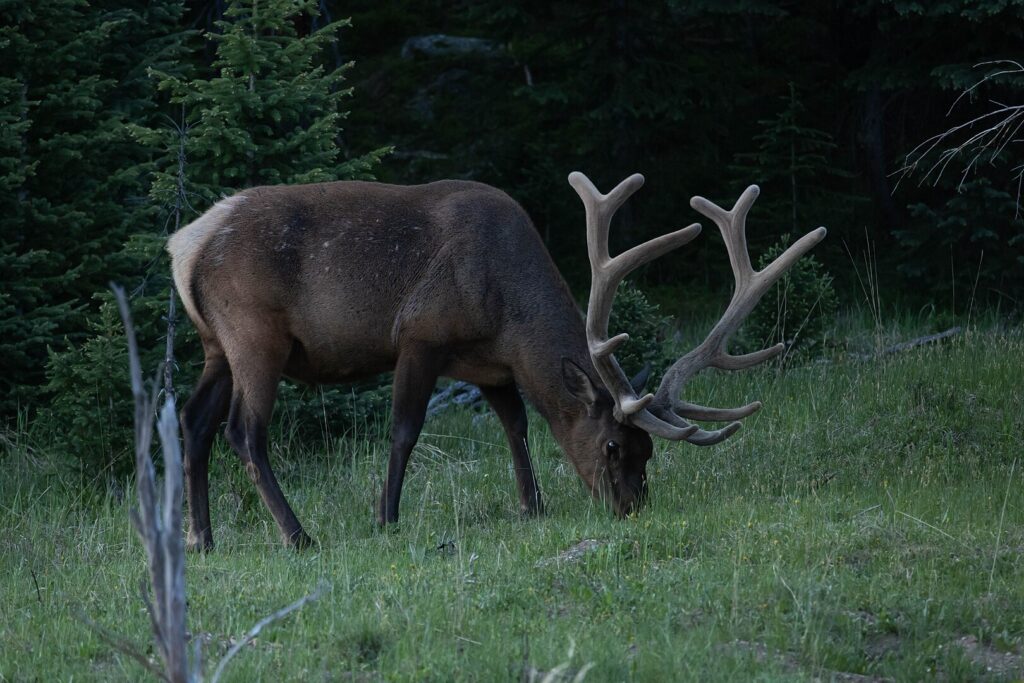
Rocky Mountain National Park stands as one of America’s premier destinations for viewing the elk rut, with its fall population often exceeding 3,000 animals. The park’s Moraine Park, Horseshoe Park, and Upper Beaver Meadows offer expansive viewing areas where visitors can safely observe bulls gathering harems and engaging in dramatic confrontations. Early mornings and late afternoons from mid-September through mid-October provide optimal viewing conditions when the meadows fill with the hauntingly beautiful sounds of elk bugles echoing across the valleys.
The park runs a dedicated elk bugling program during rut season, with rangers providing interpretive talks and viewing guidance to enhance visitors’ understanding of this natural spectacle. Thanks to its proximity to Denver and established viewing infrastructure, Rocky Mountain National Park balances accessibility with authentic wildlife experiences better than almost any other location in the country.
Yellowstone National Park, Wyoming/Montana/Idaho
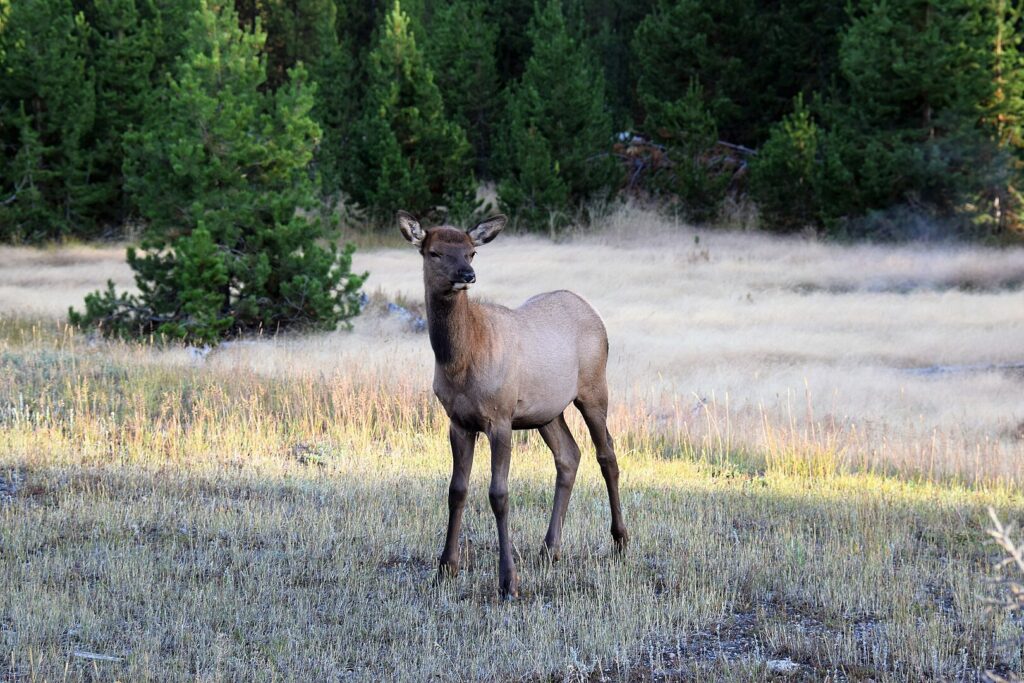
America’s first national park hosts one of the largest concentrations of wild elk in the country, making it a premier destination during rutting season. The Mammoth Hot Springs area and the Lamar Valley, often called “America’s Serengeti,” are particularly renowned for elk viewing opportunities, where massive bulls with antler spans exceeding four feet patrol their territories. Yellowstone’s northern range provides an exceptional backdrop for wildlife photography, as elk can be seen against thermal features, river valleys, and the dramatic mountain landscape.
The park’s elk population follows ancient migration patterns, moving from high summer pastures to lower elevations during the rut in September and early October. Unlike some other viewing locations, Yellowstone offers the unique opportunity to potentially see elk interacting with other wildlife like wolves and grizzlies, providing a more complete ecosystem experience for wildlife enthusiasts.
Grand Teton National Park, Wyoming
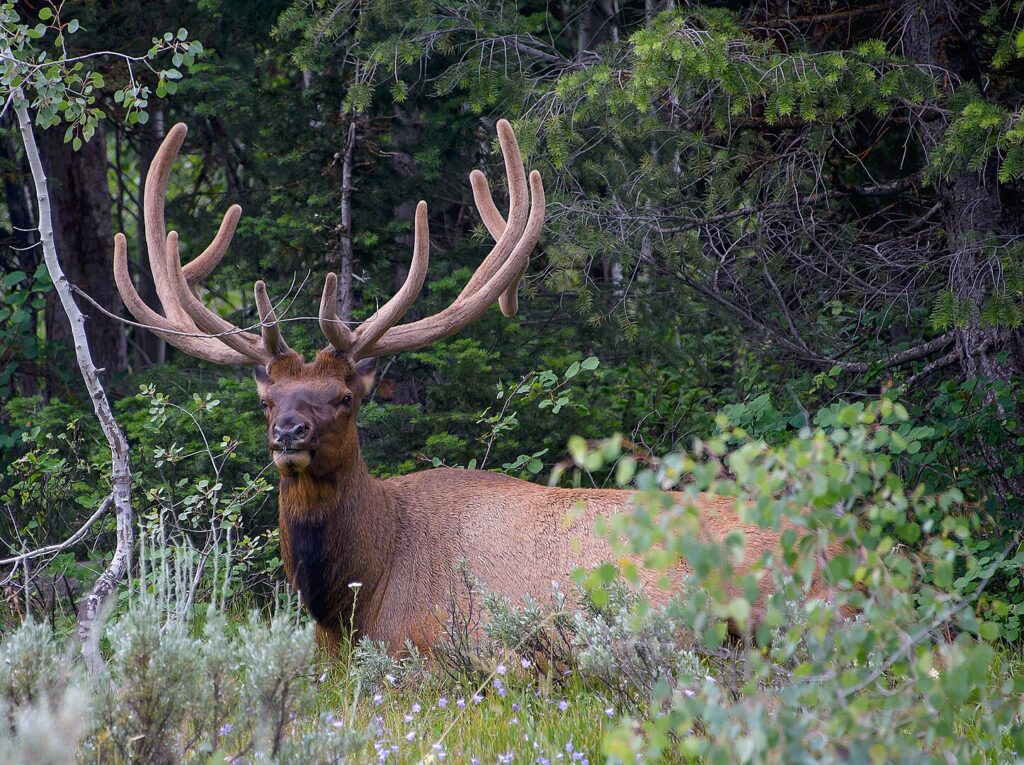
Grand Teton National Park’s combination of open sage flats, riparian corridors, and the dramatic Teton Range creates an incomparable setting for elk rut viewing and photography. The park hosts approximately 11,000 elk annually, with prime viewing locations including Willow Flats near Jackson Lake Lodge, Oxbow Bend, and the Elk Ranch Flats along Highway 26/89/191. Grand Teton is particularly special because its elk herds are part of the Greater Yellowstone Ecosystem’s impressive Jackson Elk Herd, one of the largest in North America.
During the rut, bulls compete intensely over the females, and visitors can witness these interactions against the backdrop of snow-dusted mountain peaks for an experience that ranks among the most picturesque wildlife viewing opportunities in the country. Morning fog often drapes the valleys, creating ethereal conditions as the first light illuminates elk silhouettes and the surrounding mountains turn pink with alpenglow.
Great Smoky Mountains National Park, Tennessee/North Carolina
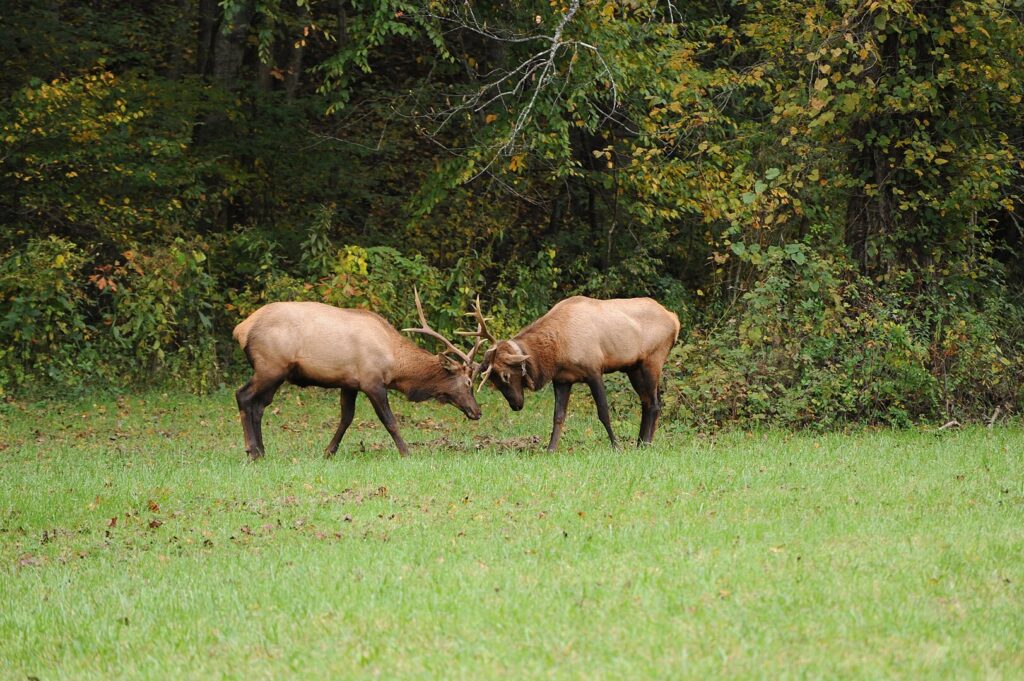
The reintroduction of elk to the eastern United States has created a unique opportunity to witness the rut in the ancient Appalachian landscape of Great Smoky Mountains National Park. Cataloochee Valley serves as the primary viewing area, where a growing population of elk can be observed in mountain meadows surrounded by hardwood forests that blaze with fall colors during the rutting season. The eastern elk subspecies was hunted to extinction by the late 1800s, but the successful reintroduction program beginning in 2001 has established a healthy population that now entertains visitors with their autumn courtship displays.
Unlike western parks where elk viewing often requires long-distance observation, Cataloochee’s intimate setting sometimes allows visitors to observe behaviors more closely (though always maintaining safe distances). The juxtaposition of bugling elk against historic pioneer structures like the Palmer House and Caldwell Barn offers a uniquely Appalachian elk viewing experience impossible to replicate elsewhere.
Wind Cave National Park, South Dakota
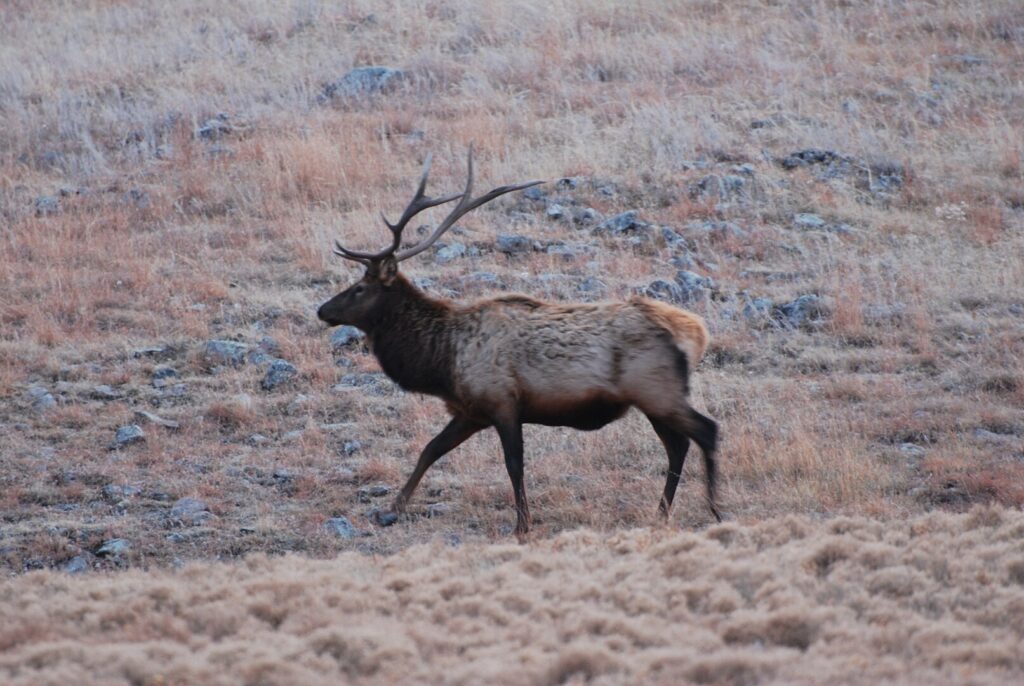
Often overlooked in favor of its more famous neighbors, Wind Cave National Park offers exceptional elk viewing opportunities across its 34,000-acre mixed-grass prairie ecosystem. The park’s rolling hills and open landscapes make it relatively easy to spot elk herds during the rut, particularly in the Red Valley area and along the park’s scenic NPS 5 and NPS 6 roads. Wind Cave’s elk population benefits from the park’s connection to the larger Black Hills ecosystem, where approximately 7,000 elk roam freely across public and private lands.
The prairie setting creates a distinctly different viewing experience compared to mountain parks, with the earth-toned landscape allowing visitors to observe natural elk behaviors without the distraction of crowds commonly found at more popular destinations. Early mornings at Wind Cave often feature elk silhouetted against the rising sun as they move from nighttime feeding areas, creating dramatic photo opportunities for patient wildlife enthusiasts.
Theodore Roosevelt National Park, North Dakota
Theodore Roosevelt National Park offers a unique opportunity to witness elk during the rut in the rugged badlands landscape that shaped a future president’s conservation ethic. The park’s South Unit and Elkhorn Ranch Unit both provide excellent viewing opportunities, with the dramatic bugling of bulls resonating through the colorful eroded canyons and open prairie from mid-September through October. The park’s elk population demonstrates the success of reintroduction efforts after the original inhabitants were extirpated in the early 1900s, now thriving in this mixed grassland and badlands environment.
Theodore Roosevelt’s personal connection to this landscape adds historical significance to wildlife viewing here – he famously wrote about hunting elk in these very badlands, making this one of the few places where visitors can directly connect America’s conservation history with contemporary wildlife viewing. Dawn and dusk provide the best opportunities when bulls emerge from the broken terrain to stake their claims in the river bottoms and grassy plateaus.
Olympic National Park, Washington
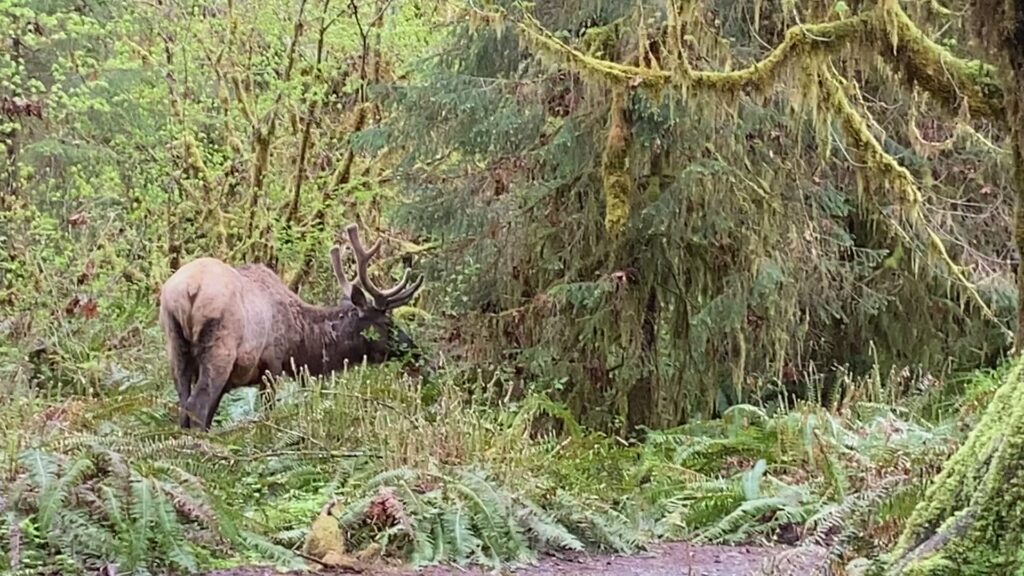
Olympic National Park protects a unique subspecies – the Roosevelt elk – named after the conservation-minded president who established wildlife refuges to protect these magnificent animals from extinction. The Hoh Rain Forest and Quinault Valley offer exceptional viewing opportunities during the rut, with massive bulls sporting antlers that can weigh up to 40 pounds competing amidst moss-draped ancient forests and misty river valleys. The coastal temperate rainforest setting creates an entirely different elk viewing experience from the mountain parks of the interior west, as these elk have adapted to the wet, mild climate and dense forest conditions of the Pacific Northwest.
Olympic’s elk often appear more massive than their Rocky Mountain cousins, with adult bulls sometimes exceeding 1,000 pounds – an adaptation to the lush coastal environment where food remains abundant year-round. Morning fog filtering through towering Sitka spruce and western hemlock creates an almost mystical backdrop as bulls patrol their harems and challenge rivals.
Point Reyes National Seashore, California
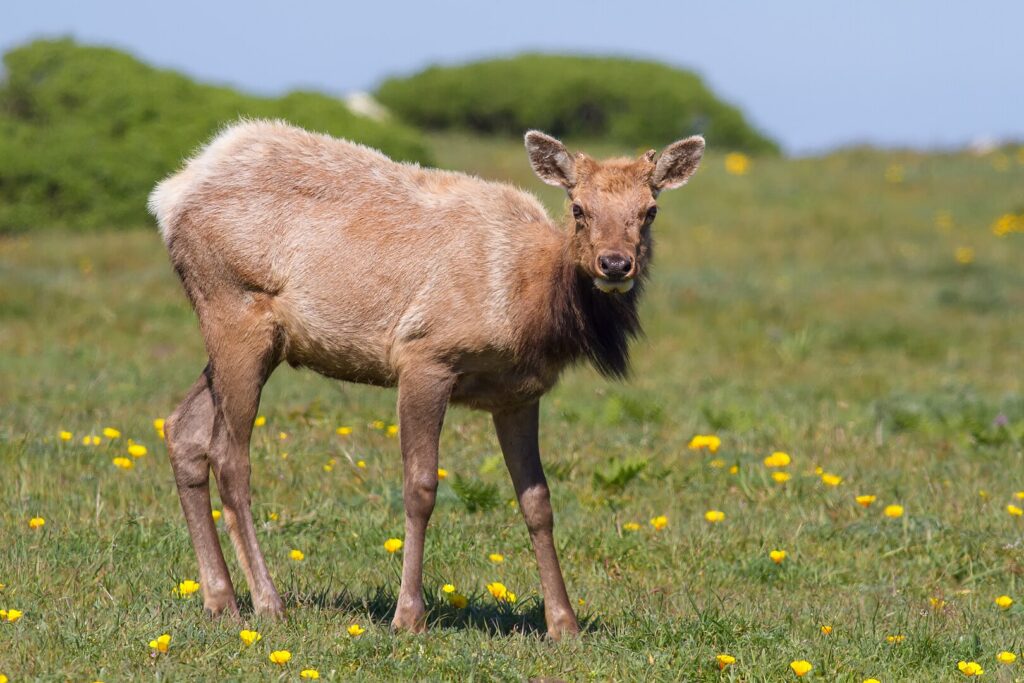
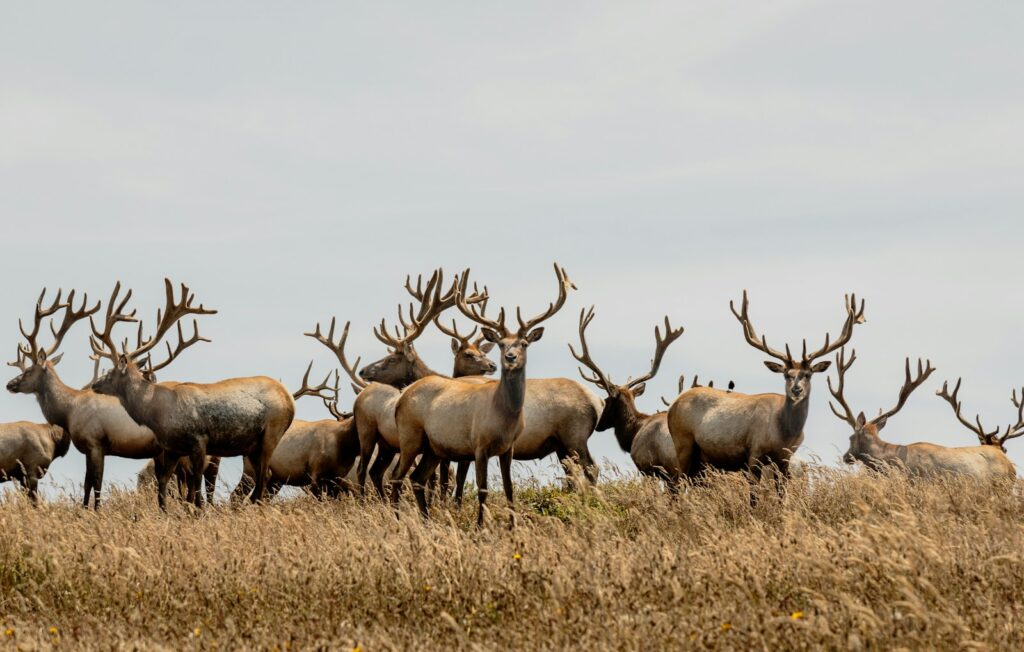
Point Reyes National Seashore offers perhaps the most unique elk viewing opportunity in America – the chance to observe tule elk during the rut against the backdrop of the Pacific Ocean. The Tomales Point Tule Elk Reserve contains a thriving population of these endemic California elk that were once reduced to a single pair before conservation efforts saved them from extinction. The coastal scrub and grassland environment creates exceptional visibility for wildlife viewing, with bulls often silhouetted dramatically against the ocean horizon during their autumn competitions.
Unlike many other elk viewing destinations, Point Reyes combines wildlife observation with spectacular coastal scenery, including dramatic cliffs, sandy beaches, and the possibility of spotting marine mammals while waiting for elk to appear. The Mediterranean climate means comfortable viewing conditions during the September-October rut, without the extreme temperatures often found in mountain or prairie environments during the same season.
Elk Country Visitor Center, Pennsylvania
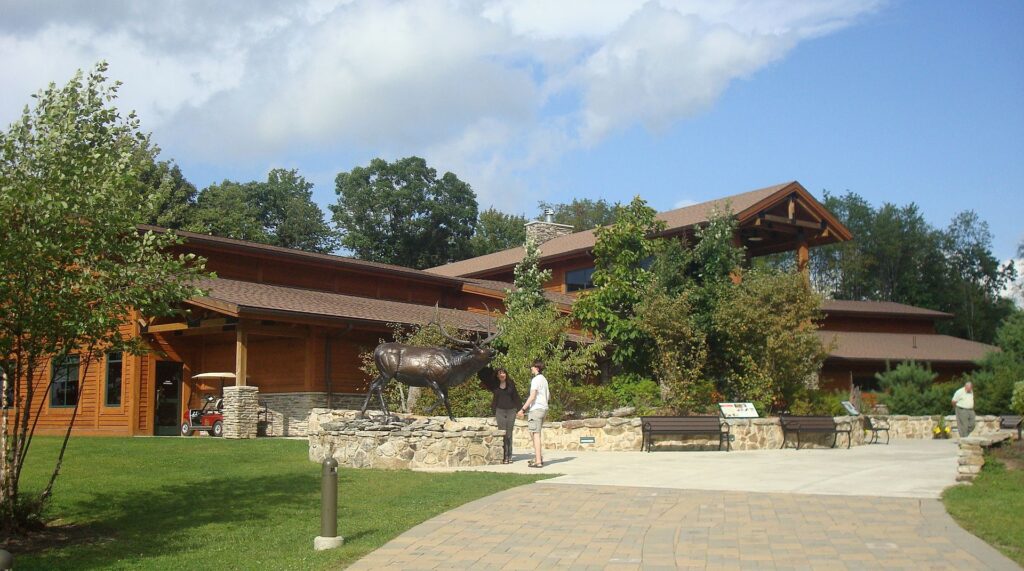
While not a national park, Pennsylvania’s Elk Country Visitor Center in Benezette deserves mention as the premier eastern elk viewing destination during the rut. Located in the heart of the state’s 3,000-strong elk range, the facility offers professionally designed viewing areas overlooking prime elk habitat in the Pennsylvania Wilds. The eastern elk experience differs markedly from western viewing opportunities, as these reintroduced animals inhabit a mosaic of managed clearings surrounded by dense eastern hardwood forests that blaze with fall colors during the rut.
Food plots maintained specifically for wildlife viewing enhance the probability of encountering elk, making this one of the most reliable viewing opportunities in the eastern United States. The center provides educational programming focusing on the successful restoration of elk to their ancestral range in the Allegheny Mountains, where they had been absent for over 100 years before reintroduction efforts began in 1913.
Understanding Elk Rutting Behavior
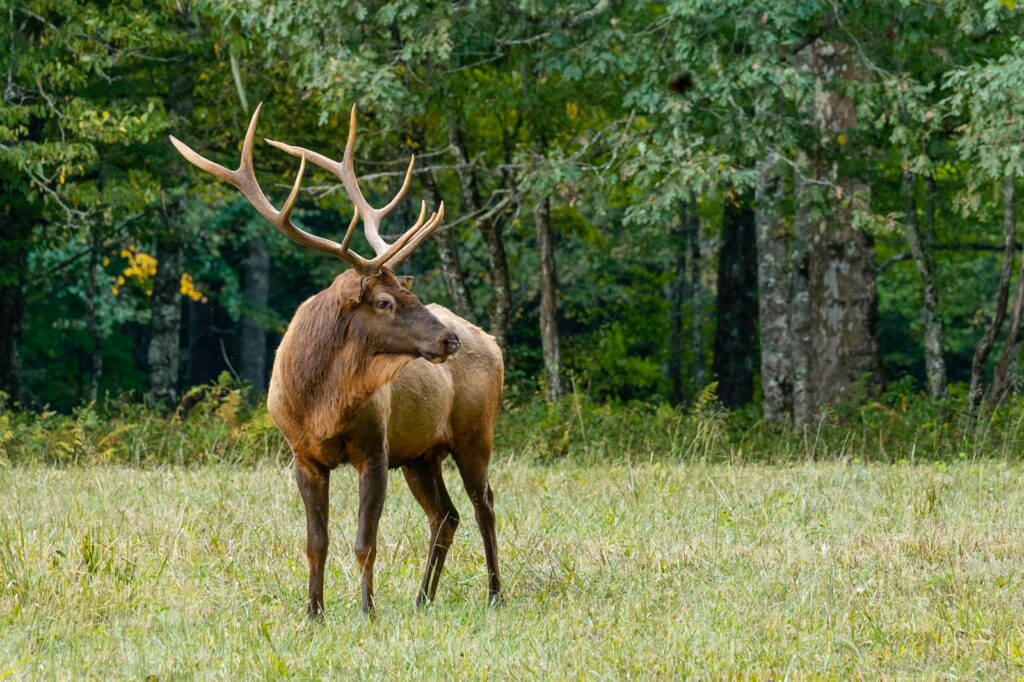
The elk rut involves intricate behaviors that have evolved over millennia to ensure only the strongest males pass their genes to the next generation. Bulls begin preparing in late summer by rubbing the velvet from their antlers against trees and shrubs, creating polished weapons for the competitions ahead. As testosterone levels rise, bulls establish territories and begin gathering females into harems they defend vigorously against challengers through a progression of behaviors that include bugling, parallel walking displays, and potentially violent antler-to-antler combat.
The haunting bugle – a multi-toned vocalization that begins with a deep growl, rises to a high-pitched whistle, and ends with a series of grunts – serves both to attract females and warn competing males of a bull’s presence and strength. Understanding these behaviors enhances the viewing experience, as observers can anticipate the progression from vocal challenges to physical confrontations when dominant bulls encounter worthy rivals.
Best Times and Viewing Practices
Timing is crucial for successful elk rut viewing, with the peak season typically falling between mid-September and mid-October, though this can vary by location and elevation. The most productive viewing hours occur during the first two hours after sunrise and the last two hours before sunset, when elk are most active and light conditions create dramatic photography opportunities. Responsible viewing practices include maintaining distances of at least 100 yards from elk, using spotting scopes or binoculars for close-up observation rather than approaching animals, and remaining on designated trails and viewing areas to minimize habitat disturbance.
Weather patterns significantly influence elk activity, with cooler temperatures typically increasing daytime movements and vocal displays, while unseasonably warm conditions may shift elk behavior toward nighttime hours. Patience rewards wildlife viewers, as the most memorable encounters often come after quietly observing from one location for extended periods rather than constantly moving in search of animals.
Photographing the Elk Rut
Capturing the drama of the elk rut presents both tremendous opportunities and unique challenges for wildlife photographers. A telephoto lens of at least 400mm is essential for ethical wildlife photography that doesn’t disturb natural behaviors, while a tripod provides necessary stability during the low-light conditions of early morning and evening when elk are most active. Understanding elk behavior helps photographers anticipate action moments – bulls typically bugle with their heads raised and mouths open, while pre-combat posturing includes parallel walking with antlers tilted toward opponents.
The best photographs often incorporate environmental elements that tell a more complete story: autumn foliage, mountain backdrops, morning mist, or the steam of breath visible in cold morning air. Professional wildlife photographers recommend setting up well before sunrise to be in position when animals emerge from nighttime bedding areas, using exposure compensation to handle challenging backlit situations, and always prioritizing animal welfare over getting the “perfect shot” by maintaining appropriate distances and never blocking animal movement corridors.
Conservation and Challenges
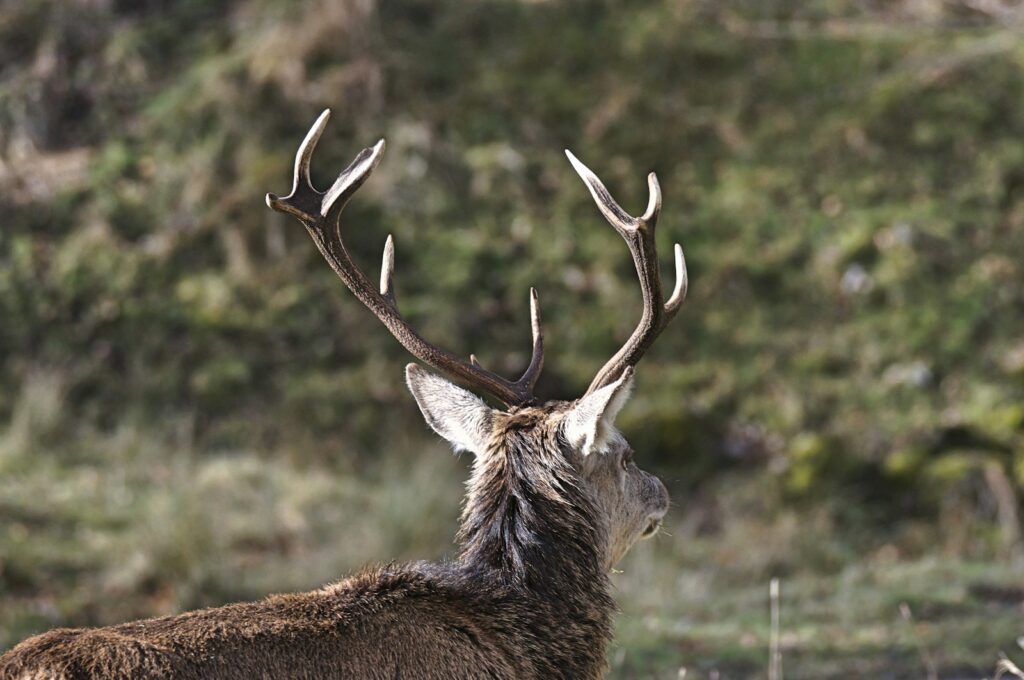
The opportunity to witness the elk rut in these magnificent settings exists only because of concerted conservation efforts throughout the 20th century, when elk populations were restored from near-extinction to sustainable levels across much of their historic range. Today’s elk face new challenges, including habitat fragmentation from development, climate change altering traditional migration routes and food availability, and diseases like chronic wasting disease threatening population health in some regions. National parks serve as crucial anchor points in elk conservation, providing protected core habitat connected to surrounding public lands that collectively support sustainable populations.
Visitor education represents a vital component of these conservation efforts, as responsible wildlife viewing practices help minimize human impacts during the sensitive breeding season. Conservation success stories – like the restoration of elk to the eastern United States after a century of absence – demonstrate the resilience of these magnificent animals when given adequate protection and habitat.
Conclusion: Experience the Thrill of the Elk Rut in National Parks
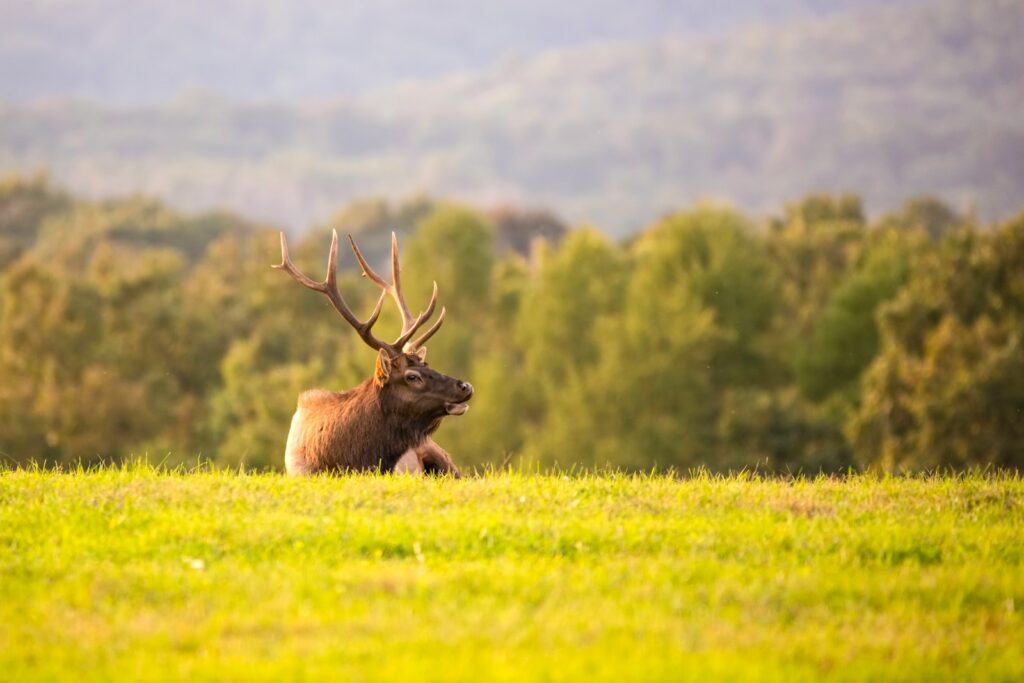
The opportunity to witness the elk rut combines the best elements of wildlife viewing – drama, accessibility, and connection to ancient natural cycles. These parks not only provide front-row seats to one of North America’s most magnificent wildlife spectacles but also serve as crucial conservation areas ensuring future generations can experience the thrill of hearing a bull elk’s bugle echo across a misty valley.
Whether you choose the rainforest setting of Olympic, the mountain backdrop of Rocky Mountain National Park, or the eastern hardwoods of Great Smoky Mountains, the autumn elk rut offers an unparalleled wildlife viewing experience that showcases both the majesty of these animals and the success of America’s conservation ethic. By observing responsibly and supporting the parks that protect these habitats, visitors become part of the ongoing story of elk conservation across the American landscape.