
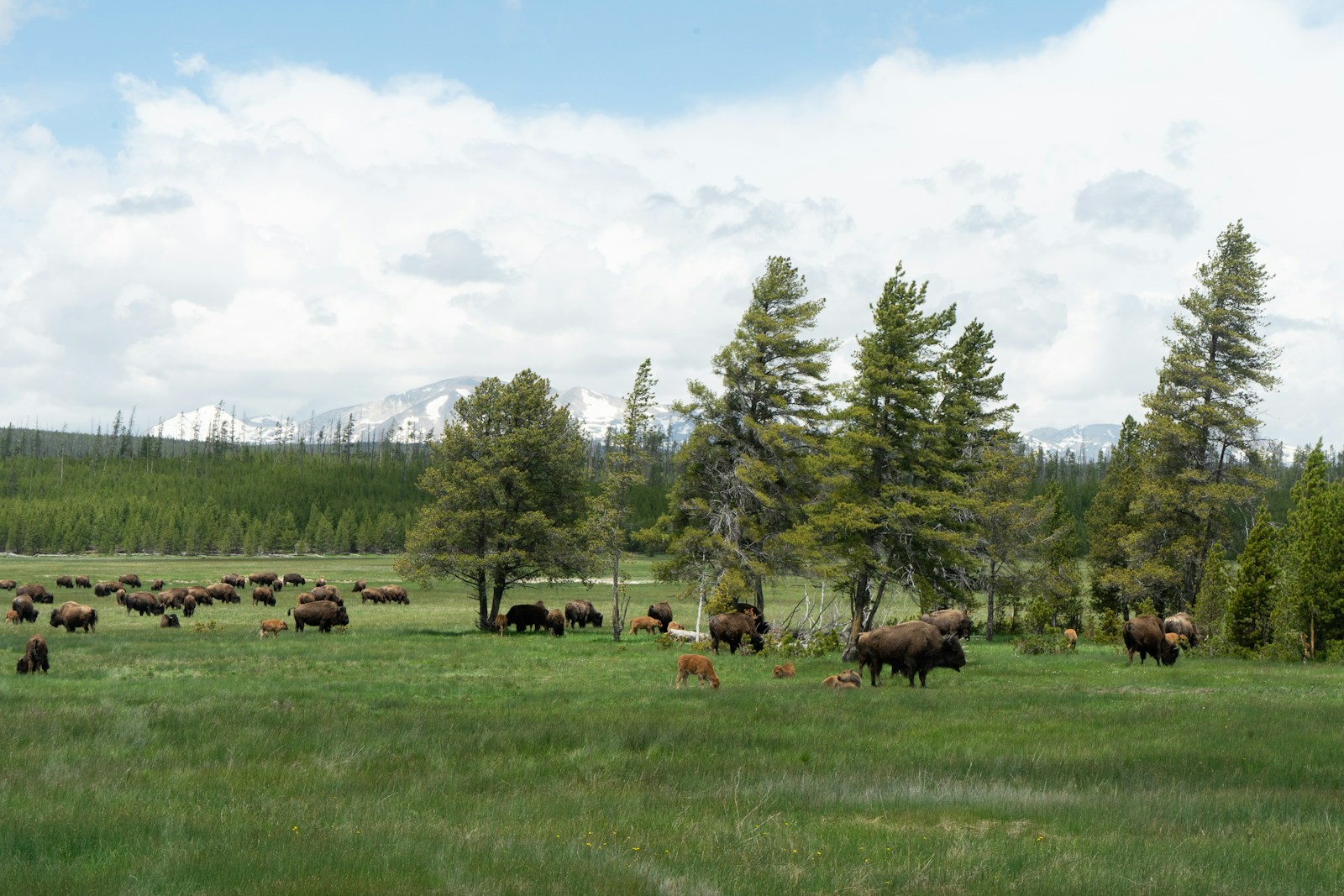
The vast, sweeping grasslands of North America once thundered with the hooves of millions of bison, creating one of the most perfectly balanced ecosystems on the planet. These massive mammals weren’t just passive inhabitants of the prairie—they were ecosystem engineers whose grazing patterns, physical presence, and behaviors shaped the very landscape they inhabited. Today, as conservationists and land managers seek sustainable solutions for degrading grasslands, they’re increasingly turning to a time-tested method: bison grazing. This ancient relationship between bison and grasslands represents one of nature’s most successful partnerships, one that developed over thousands of years of coevolution. As we’ll explore, the reintroduction of bison to their native ranges isn’t merely a conservation curiosity—it’s proving to be an essential component of grassland health, biodiversity preservation, and even climate change mitigation.
The Evolutionary Dance Between Bison and Grasslands

The relationship between bison and North American grasslands dates back approximately 500,000 years, representing one of the continent’s most enduring ecological partnerships. Throughout this immense timespan, prairie plants evolved specific adaptations to not just survive bison grazing but to actually thrive because of it. Unlike cattle, which tend to graze more uniformly, bison engage in what ecologists call “patch grazing,” creating a mosaic of vegetation at different growth stages that maximizes biodiversity. This co-evolutionary relationship means that many prairie plants actually require the specific pressure of bison grazing to complete their life cycles and maintain healthy populations. Without this evolutionary dance, many grassland ecosystems fall out of balance, with certain species dominating at the expense of overall ecosystem diversity and resilience.
The Unique Grazing Pattern of Bison

Bison employ a grazing strategy fundamentally different from domestic livestock, creating distinctive effects on grassland ecosystems. Rather than remaining in one area until all preferred vegetation is consumed, bison practice nomadic grazing—moving continuously across the landscape and rarely returning to the same patch until plants have fully recovered. This movement pattern allows grasses to regenerate completely between grazing periods, preventing overgrazing and soil degradation. Additionally, bison selectively target certain grasses while leaving others, effectively pruning dominant species and creating competitive space for a wider variety of plants. Research has shown that areas with bison grazing typically contain 50-60 more plant species than similar ungrazed areas, demonstrating how their feeding habits directly enhance biodiversity.
Soil Health and Nutrient Cycling

Bison contribute dramatically to soil health through several mechanisms that domestic livestock simply cannot replicate at the same scale. As they graze, bison deposit approximately 50 pounds of nutrient-rich manure daily per animal, effectively redistributing plant nutrients across the landscape in a form readily available to growing plants. Their massive hooves—considerably larger than cattle hooves—break up compacted soil and press seeds firmly into the ground, enhancing germination rates by up to 30% compared to ungrazed areas. Perhaps most significantly, their wallowing behavior—where bison roll and create depressions in the soil—creates microhabitats that collect water and support distinct plant communities that wouldn’t otherwise exist. These wallows can persist for decades, becoming biodiversity hotspots that support species from salamanders to specialized prairie plants that require the unique conditions these depressions provide.
Fire and Grazing: The Pyric Herbivory Connection

The interaction between bison grazing and natural prairie fires represents one of the most sophisticated ecological relationships in grassland systems. Historically, bison would preferentially graze in recently burned areas, attracted by the tender, nutritious regrowth that emerges after fire clears away old vegetation. This behavior, termed “pyric herbivory” by ecologists, creates a self-reinforcing cycle that maintains grassland health: fires stimulate fresh growth, bison concentrate their grazing on these areas, and their selective feeding prevents any single species from dominating the recovery process. This relationship helps explain why grasslands managed with both fire and bison grazing show significantly higher plant diversity than those managed with either component alone. Modern conservation practices now increasingly incorporate controlled burns alongside bison reintroduction, mimicking this ancient ecological dynamic to restore degraded prairie systems.
Climate Resilience Through Bison Grazing

As climate change intensifies, properly managed bison grazing is emerging as a powerful tool for building resilience in grassland ecosystems. Bison-grazed prairies typically develop deeper, more extensive root systems than ungrazed or cattle-grazed systems, significantly enhancing carbon sequestration capabilities. Research from the Konza Prairie Biological Station indicates that bison-grazed grasslands can sequester up to 30% more carbon in soil compared to similar ungrazed areas. During drought conditions, these deeper root systems access moisture unavailable to shallower-rooted plants, allowing the ecosystem to maintain productivity when other landscapes fail. Additionally, the mosaic of vegetation heights created by bison grazing creates microhabitats with varying temperatures and humidity levels, providing refuge for insects and small animals during extreme weather events, effectively creating a more climate-adaptive landscape.
Bison vs. Cattle: Different Impacts on Prairie Ecosystems
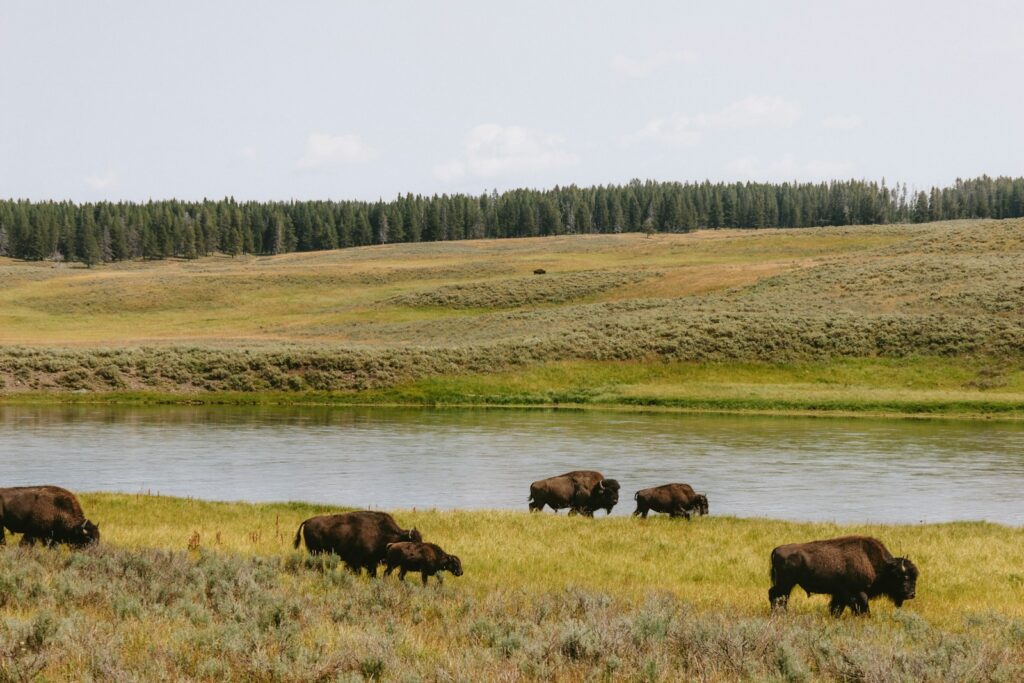
While cattle have replaced bison across much of North America’s grasslands, their ecological impacts differ significantly in ways critical to grassland health. Bison spend significantly less time near water sources than cattle, reducing riparian damage and allowing sensitive streamside vegetation to flourish. Their grazing preferences also differ markedly—bison primarily consume grasses (making up about 90% of their diet), while cattle consume a higher proportion of forbs and woody plants, creating different competitive dynamics among plant species. Perhaps most importantly, bison are adapted to survive the extreme temperature fluctuations of prairie environments without requiring the same level of water access or shelter as cattle, allowing them to utilize and impact a much broader range of the landscape throughout the year. Studies comparing bison-grazed and cattle-grazed plots consistently show higher plant diversity, better soil structure, and more robust invertebrate populations in bison-managed areas.
Supporting Bird and Insect Diversity

The heterogeneous vegetation structure created by bison grazing provides essential habitat diversity for grassland birds, many of which are experiencing alarming population declines. Some species, like the Grasshopper Sparrow, require short, recently grazed patches for foraging, while others, such as Henslow’s Sparrow, depend on taller, less disturbed grasses for nesting—a habitat mosaic naturally maintained by bison grazing patterns. Insect diversity also flourishes under bison management, with studies documenting up to three times more butterfly species in bison-grazed areas compared to ungrazed or uniformly managed grasslands. This insect abundance ripples through the food web, supporting everything from grassland birds to predatory mammals and reptiles. The dung beetles and other decomposers specifically adapted to process bison waste further enhance this diversity, creating microhabitats within the larger grassland ecosystem that support specialized communities of organisms.
Case Study: The Konza Prairie Experiment

The Konza Prairie Biological Station in Kansas offers one of the most compelling examples of how bison grazing transforms grassland ecosystems. This long-term ecological research site has maintained experimental watersheds with and without bison grazing since 1987, creating one of the world’s most comprehensive datasets on bison ecological impacts. After more than three decades, the differences are striking—bison-grazed areas maintain approximately 25% higher plant species richness compared to ungrazed areas. Soil carbon has increased significantly in grazed watersheds, while ungrazed areas show signs of woody encroachment that reduces grassland extent. Perhaps most remarkably, researchers have documented changes in plant evolutionary trajectories, with certain species developing different growth forms in response to sustained bison presence. This natural experiment demonstrates that bison don’t simply maintain grasslands—they actively shape plant communities in ways that enhance resilience and diversity.
Restoration Success Stories
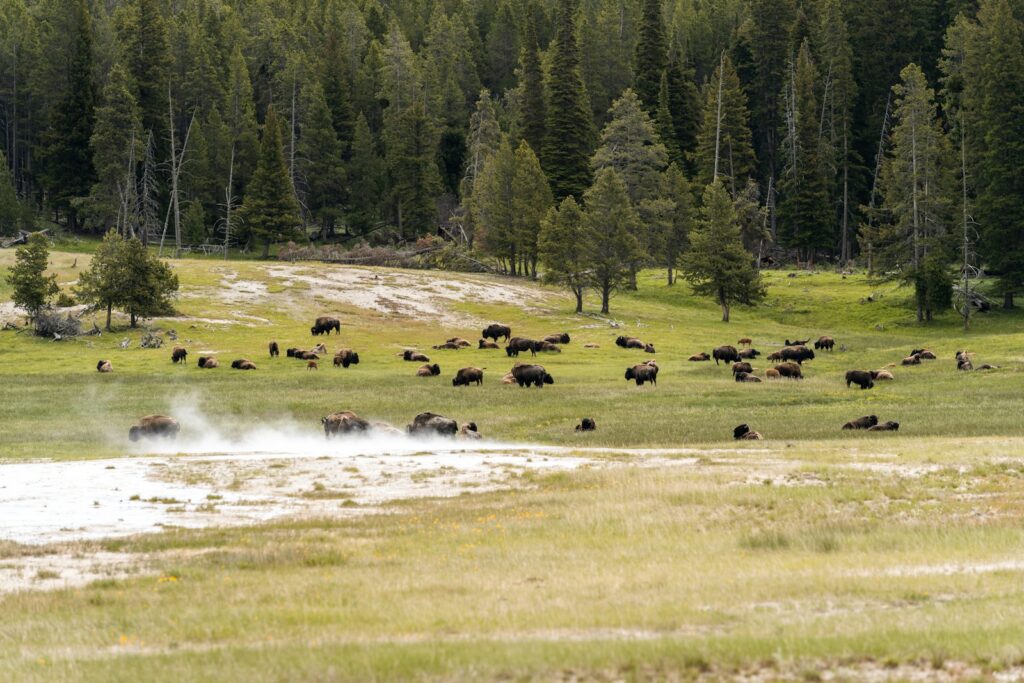
Across North America, bison reintroduction projects are demonstrating remarkable ecological transformations. The American Prairie Reserve in Montana has documented substantial changes in just 15 years since bison reintroduction, including increased native plant diversity and the return of prairie dog colonies, which themselves create habitat for numerous dependent species. At Nachusa Grasslands in Illinois, where bison were reintroduced to a restored prairie in 2014, researchers have already documented significant increases in both plant and insect diversity, including the return of several butterfly species previously absent from the area. The Blackfeet Nation’s Iinnii Initiative has reintroduced bison to tribal lands in Montana, not only restoring ecological processes but revitalizing cultural practices intimately connected to bison presence. These success stories share a common thread: relatively rapid ecological response to bison reintroduction, suggesting that grassland ecosystems retain the capacity to recover when their keystone herbivore returns.
Economic Benefits of Bison-Based Restoration

The ecological benefits of bison grazing increasingly translate into economic advantages for landowners and communities. Bison-based tourism generates significant revenue for both private ranches and public lands, with visitors willing to pay premium prices for bison viewing opportunities—the American Bison Society estimates that bison-related tourism contributes over $1 billion annually to local economies across North America. Bison meat commands premium prices in specialty markets, creating sustainable income streams that can support conservation-focused management practices. Perhaps most significantly, the ecosystem services provided by bison-maintained grasslands—including improved water filtration, flood mitigation, and carbon sequestration—deliver substantial economic value, with some estimates suggesting these services are worth $900-$2,800 per hectare annually depending on location. These economic incentives are encouraging more landowners to incorporate bison into their land management strategies, effectively aligning financial and ecological goals.
Challenges in Scaling Bison Restoration

Despite compelling evidence supporting bison reintroduction, significant challenges remain in scaling these efforts across North America’s degraded grasslands. Physical infrastructure requirements present immediate hurdles, as bison require more robust fencing and handling facilities than cattle, representing substantial upfront costs for landowners considering conversion. Disease management concerns, particularly regarding brucellosis in some wild bison herds, create regulatory complications for translocating animals across state lines. Social resistance also persists in some agricultural communities, where concerns about competition with cattle ranching and unfamiliarity with bison management create barriers to adoption. Perhaps most fundamentally, the fragmentation of once-continuous prairie habitat means many restoration projects must operate as isolated islands rather than connected systems, limiting the full expression of natural bison movement patterns and behaviors. Addressing these challenges requires coordinated efforts between conservation organizations, government agencies, private landowners, and indigenous communities who hold traditional knowledge about bison management.
Indigenous Knowledge and Bison Management

For thousands of years before European colonization, Indigenous peoples of the Great Plains developed sophisticated bison management practices that maintained both human communities and grassland health. Many tribes used controlled burning to create the patchy habitat that attracted bison, effectively managing the landscape to enhance bison numbers while maintaining diverse plant communities. Traditional hunting practices typically targeted specific animals within herds, maintaining population health while ensuring sustainable harvests. Today, Indigenous-led bison restoration efforts like the InterTribal Buffalo Council are combining this traditional ecological knowledge with contemporary science to create management approaches that honor cultural connections while addressing modern conservation challenges. These initiatives recognize that cultural restoration and ecological restoration are inseparable—the health of grasslands, bison populations, and Indigenous communities are deeply interconnected through both practical and spiritual dimensions that Western scientific approaches alone often fail to address.
Future Directions for Bison-Grassland Conservation

The future of bison-grassland conservation will likely follow several emerging pathways that build on current successes while addressing persistent challenges. Collaborative conservation models that span public, private, and tribal lands are gaining momentum, creating larger connected landscapes where bison can express more natural behaviors and ecological functions. Developing market-based incentives, such as carbon credits for the enhanced sequestration provided by bison-grazed grasslands, offers promising financial mechanisms to support expanded restoration efforts. Advancements in genetic research are helping managers maintain genetic diversity in smaller, isolated herds through strategic translocations and breeding programs. Perhaps most importantly, growing recognition of the climate resilience provided by properly managed grasslands is elevating bison restoration from a species-specific conservation concern to a key strategy in broader climate adaptation planning. These converging factors suggest that despite the challenges, the ecological future of North America’s grasslands will likely include more, not fewer, bison on the landscape.
Conclusion

The relationship between bison and grasslands represents far more than a conservation curiosity—it demonstrates nature’s sophisticated engineering at work. These massive creatures, through their grazing patterns, physical impacts, and behavioral quirks, don’t simply inhabit grasslands—they help create them. As climate change intensifies and biodiversity loss accelerates, the ancient partnership between bison and prairie offers a proven, resilient model for ecosystem management. The reintroduction of bison to their native ranges represents not just an attempt to recreate the past but a forward-looking strategy for maintaining healthy, functioning grasslands capable of supporting biodiversity, sequestering carbon, and sustaining human communities. By restoring this keystone species to its ecological role, we aren’t just saving bison—we’re helping to ensure the continued existence of one of Earth’s most important but threatened ecosystems: the grasslands that have shaped the heart of North America for millennia.