

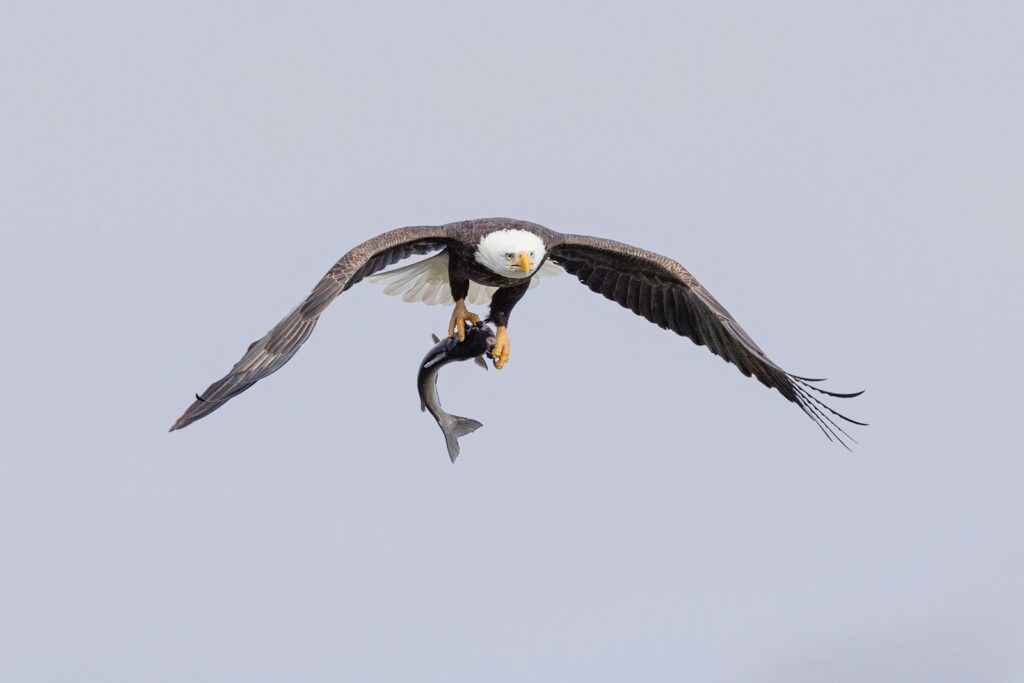
The majestic bald eagle, with its striking white head, fierce yellow eyes, and impressive seven-foot wingspan, has served as America’s national symbol for nearly 250 years. This powerful bird of prey embodies the qualities that a young nation striving for identity and independence sought to project to the world: strength, courage, freedom, and longevity. The selection of this magnificent raptor as America’s emblem wasn’t a simple or straightforward decision, but rather the result of passionate debate, careful consideration, and even some controversy. The story behind how this native North American bird rose to become the face of a nation reveals much about America’s values, aspirations, and self-image during its formative years.
The Great Seal Committee of 1776

The journey of the bald eagle toward national symbolism began formally on July 4, 1776, the very day the Declaration of Independence was adopted. Congress appointed Benjamin Franklin, Thomas Jefferson, and John Adams to design a seal that would represent the new nation’s sovereignty and values. This first committee struggled with the task, producing a complex design featuring imagery from classical mythology and biblical references that failed to capture the essence of the emerging American identity. Their initial proposal, which did not feature an eagle, was shelved by Congress for being overly complicated and lacking in distinctive American character. This setback would lead to additional committees and years of deliberation before a final design would emerge.
The Subsequent Committees and Final Design
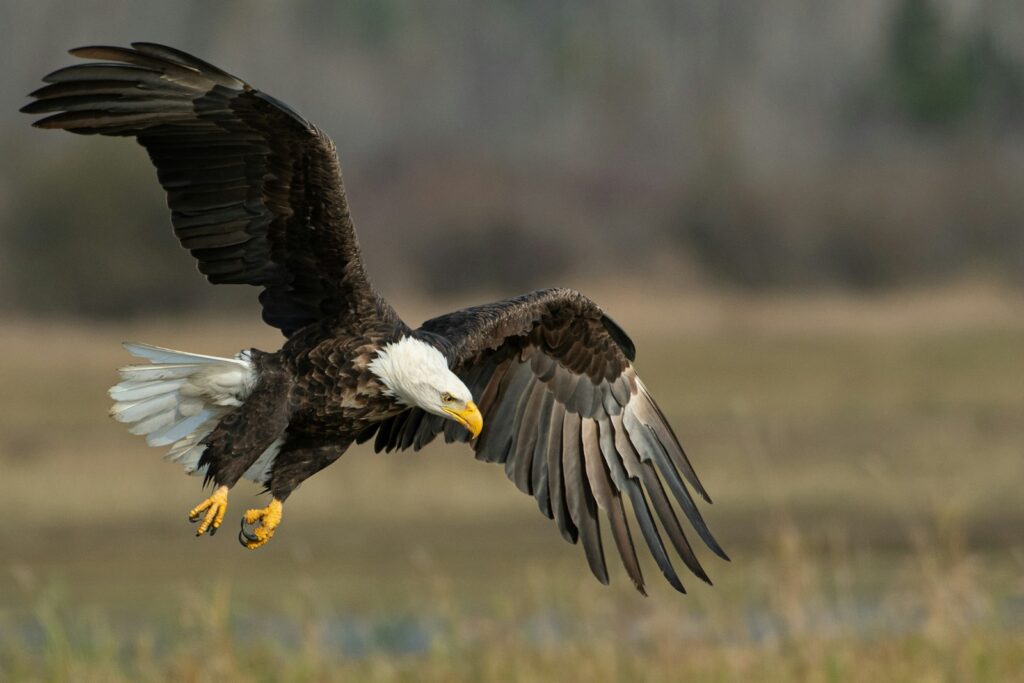
After the first committee’s design was rejected, Congress formed a second committee in 1780 and a third in 1782, each tasked with refining the concept of a national seal. The third committee’s consultant, William Barton, introduced the bald eagle into the design, though initially as a supporter for the shield rather than the central figure. Charles Thomson, Secretary of the Continental Congress, took elements from all three committee proposals and created a simplified design featuring the bald eagle prominently at its center. Thomson’s version placed the eagle with wings spread, clutching an olive branch in one talon and a bundle of arrows in the other, symbolizing the nation’s desire for peace but readiness for war. This thoughtful compromise design was finally approved by Congress on June 20, 1782, officially establishing the bald eagle as America’s national bird.
Native American Reverence for Eagles
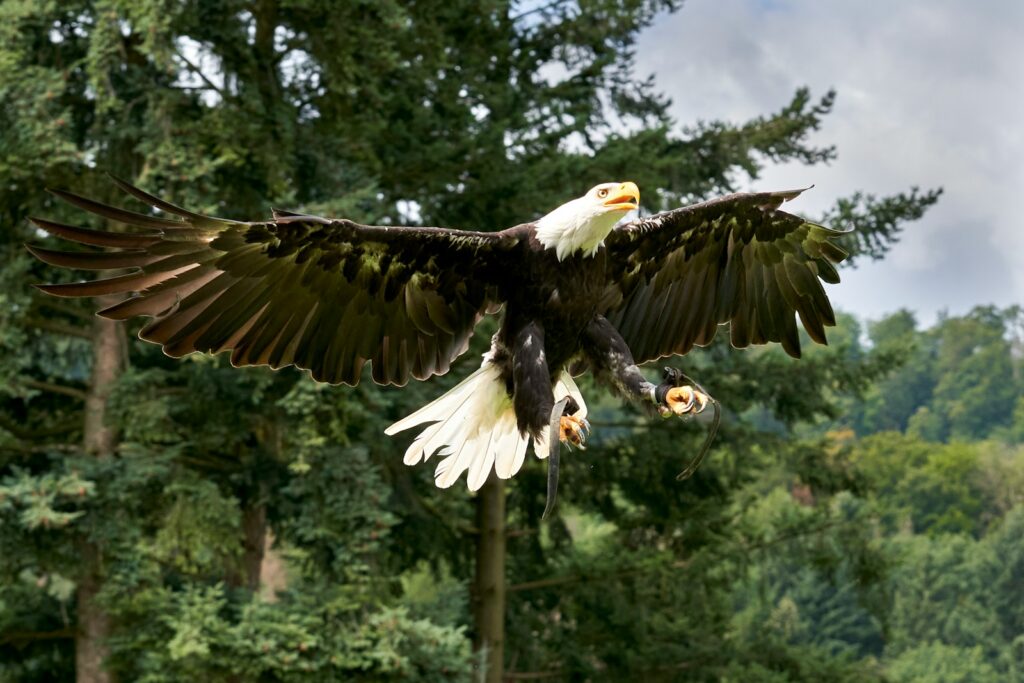
The selection of the bald eagle also connected the new nation to the indigenous cultures that had long inhabited the continent. For many Native American tribes, eagles held profound spiritual significance as messengers between humans and the divine. The feathers of these birds were considered sacred, used in important religious ceremonies and as symbols of honor, courage, and wisdom. The Pueblo people viewed the eagle as a symbol of the zenith, representing the highest point the sun reaches in the sky. By choosing a creature so deeply respected by the continent’s original inhabitants, the founding fathers—perhaps unintentionally—created a symbolic bridge between America’s indigenous heritage and its European-influenced future, though the irony of this connection would become apparent as the nation’s relationship with Native American peoples deteriorated in subsequent decades.
A Symbol of American Wilderness

The bald eagle represented something distinctly American at a time when the new nation was eager to distinguish itself from European powers. Unlike many European national symbols that drew from ancient mythology or domesticated animals, the bald eagle was a wild, untamed creature native only to North America. The bird’s habitat spanned the continent, from the Atlantic to the Pacific and from Alaska to northern Mexico, mirroring the territorial ambitions of the young republic. Its commanding presence in the skies over America’s vast wilderness resonated with the pioneering spirit of westward expansion. The selection of this uniquely American species reflected the young nation’s desire to forge an identity tied to the natural grandeur of the continent it was beginning to claim as its own.
The Symbolic Qualities of the Bald Eagle

The physical and behavioral characteristics of the bald eagle made it an ideal national symbol for a country with lofty aspirations. Its exceptional vision, capable of spotting prey from great distances, suggested foresight and vigilance. The bird’s impressive height—soaring up to 10,000 feet—evoked aspirations toward greatness and the pursuit of lofty ideals. The eagle’s reputation as a fearless defender of its territory aligned with the young nation’s determination to protect its newfound independence. Perhaps most importantly, the bald eagle’s solitary and independent nature mirrored America’s stance as it broke away from British rule and established itself as a sovereign entity on the world stage. These qualities combined to make the eagle not just a representation of America, but an embodiment of its core values and aspirations.
Benjamin Franklin’s Turkey Preference

Despite the eagle’s eventual selection, not all founding fathers were enthusiastic about the choice. Benjamin Franklin famously expressed his dissatisfaction with the bald eagle in a 1784 letter to his daughter, writing that the eagle was “a bird of bad moral character” that “does not get his living honestly” because it steals food from other birds and is “too lazy to fish for himself.” Franklin instead advocated for the wild turkey, which he described as “a much more respectable bird” and “a true original native of America.” He admired the turkey’s courage, noting that it would “not hesitate to attack a grenadier of the British Guards who should presume to invade his farm yard with a red coat on.” Franklin’s preference for the humble yet brave turkey over the majestic but sometimes scavenging eagle reflects his practical nature and offers an intriguing “what if” in American symbolic history.
The Eagle in American Presidential Iconography
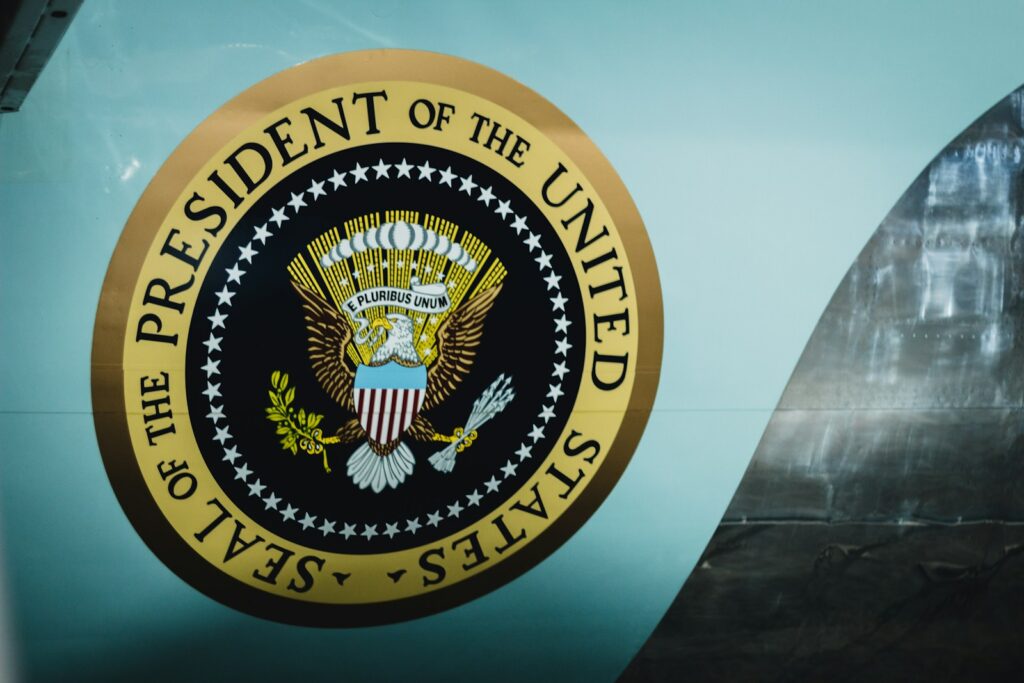
Once established as America’s national symbol, the bald eagle quickly became integrated into presidential iconography. In 1782, the same year the Great Seal was adopted, the eagle began appearing on official presidential items, creating a visual connection between the bird and executive authority. The Presidential Seal, featuring the bald eagle with wings spread wide, has become one of the most recognizable symbols of American governance. When a U.S. president enters a room, the Presidential Seal often precedes them, displayed prominently on the podium from which they speak. The eagle’s presence on Air Force One, in the Oval Office, and at presidential events reinforces its status as not just a national symbol but specifically as a representation of the executive branch and presidential power in American democracy.
The Eagle’s Role in American Currency
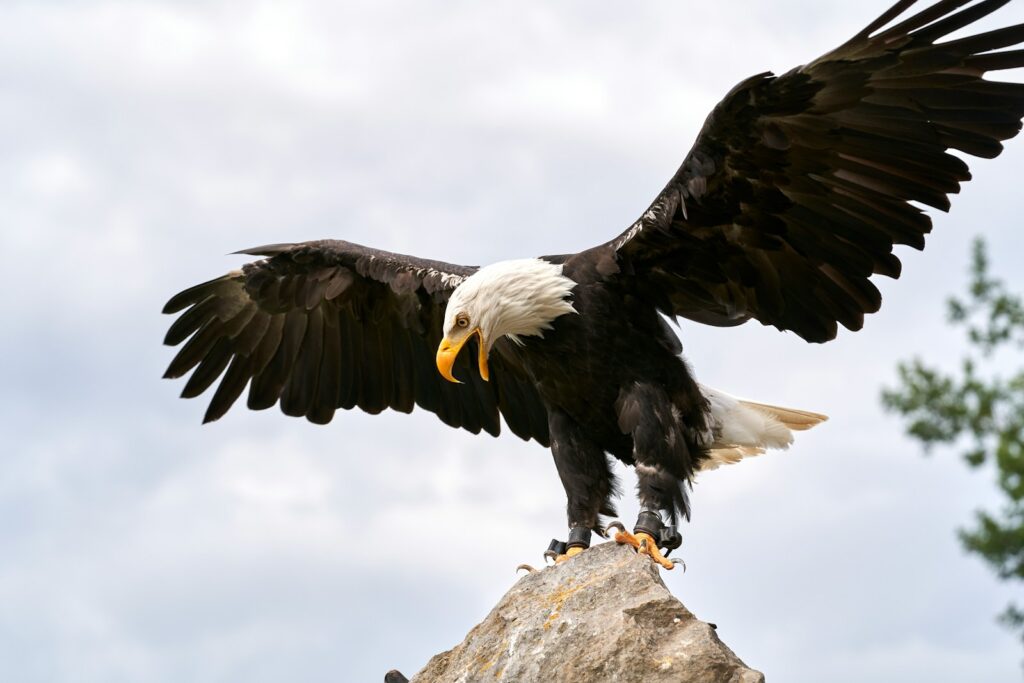
The bald eagle has been prominently featured on American currency throughout the nation’s history, serving as a daily reminder of national identity for citizens engaged in commerce. It first appeared on coins in the late 18th century, shortly after being adopted as the national symbol. The quarter eagle, half eagle, and eagle gold coins, valued at $2.50, $5, and $10 respectively, derived their very names from the bird depicted on them. In paper currency, the eagle appears on the back of the one-dollar bill as part of the Great Seal of the United States, visible in millions of daily transactions. The ubiquity of the eagle on American money has helped cement its place in the national consciousness, making it perhaps the most frequently viewed national symbol in everyday American life.
The Eagle During Times of National Crisis

During periods of national challenge and uncertainty, the bald eagle has often served as a rallying symbol of American resilience and determination. During World War II, the image of the eagle was incorporated into military insignia, propaganda posters, and patriotic displays, bolstering morale and reinforcing national unity in the face of global conflict. Following the September 11, 2001 terrorist attacks, the eagle again emerged as a powerful symbol of American strength and resolve, with images of the bird frequently appearing alongside patriotic messages and memorials. The 1972 song “Eagle When She Flies” by Dolly Parton captured this sentiment of the eagle representing America at its most determined: “She’s gentle as the sweet magnolia, strong as steel, her faith and pride will never falter.” In times of crisis, the eagle reminds Americans of their nation’s enduring spirit and capacity to overcome adversity.
The Bald Eagle’s Brush with Extinction
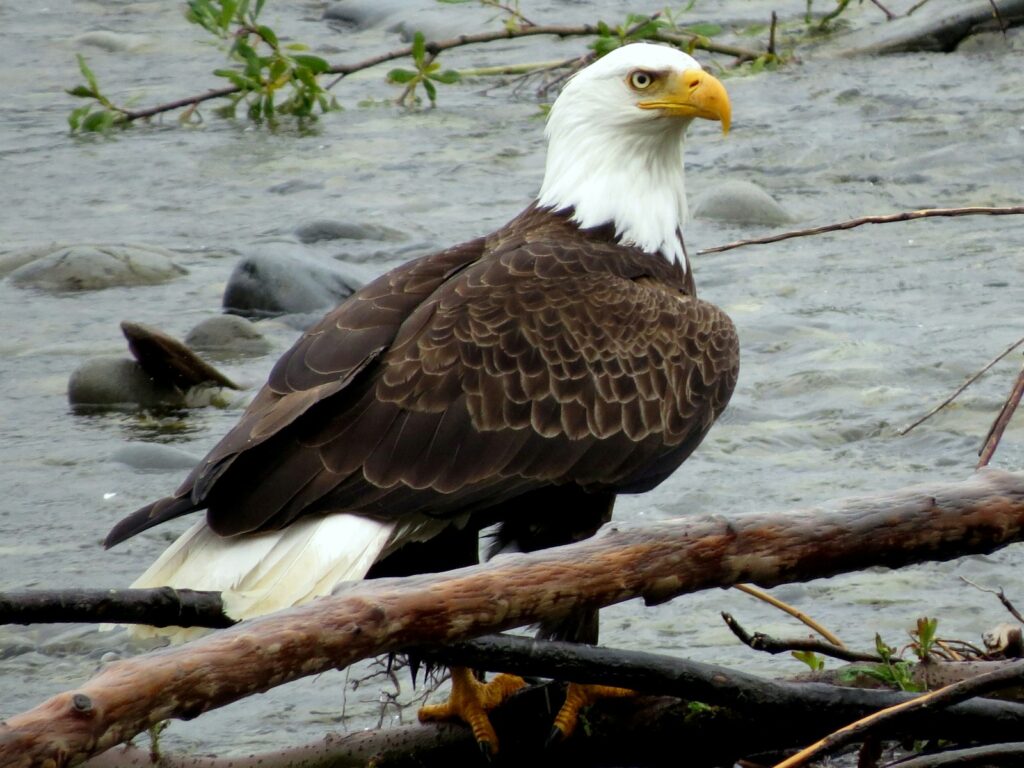
In a troubling irony, the national bird that symbolized American strength and freedom nearly disappeared from the country’s skies during the mid-20th century. By the 1960s, bald eagle populations had plummeted due to hunting, habitat destruction, and particularly the widespread use of the pesticide DDT, which caused eagles to lay eggs with shells too thin to support developing embryos. With fewer than 500 nesting pairs remaining in the lower 48 states, the species that had represented America for almost two centuries faced extinction. The bald eagle’s plight helped galvanize the emerging environmental movement, leading to the Endangered Species Preservation Act of 1966 and the subsequent banning of DDT in 1972. The eagle’s struggle for survival became a powerful metaphor for environmental consciousness in America, forcing the nation to confront the consequences of unchecked industrial progress.
The Eagle’s Recovery as an American Success Story
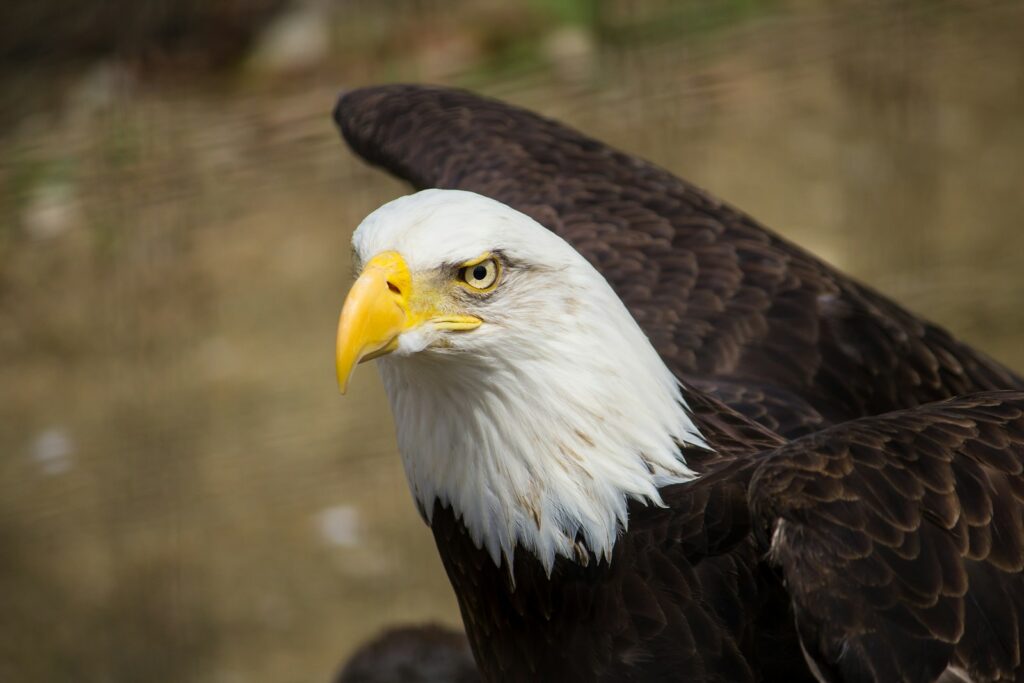
The remarkable recovery of the bald eagle from the brink of extinction stands as one of America’s greatest conservation success stories. Through decades of protected status, captive breeding programs, habitat preservation, and environmental regulations, bald eagle populations steadily increased from their dangerous low point in the 1960s. By 2007, the bird had recovered sufficiently to be removed from the endangered species list, with population estimates exceeding 9,700 breeding pairs in the lower 48 states today. This resurgence represents not just a biological victory but a symbolic one—a demonstration of America’s capacity to recognize mistakes and take collective action to correct them. The eagle’s recovery journey parallels America’s evolving environmental consciousness, from exploitation to conservation, making the bird not just a symbol of America’s past but of its potential for positive change.
The Eagle in Modern American Culture
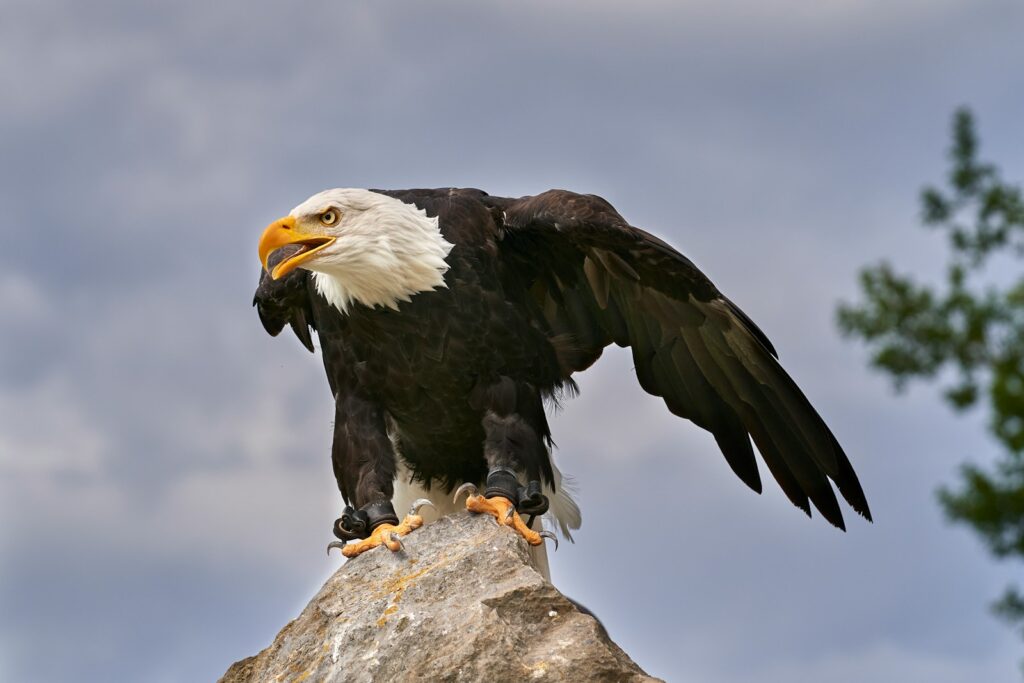
Today, the bald eagle permeates American culture far beyond official government usage, appearing in countless logos, advertisements, team mascots, and artistic representations. Professional sports teams like the Philadelphia Eagles embrace the bird’s fierce reputation, while companies seeking to project an image of American strength and reliability incorporate eagle imagery into their branding. The eagle appears in diverse artistic contexts, from the traditional paintings of John James Audubon to contemporary street art in urban centers. Eagle webcams that broadcast live footage of nesting eagles have attracted millions of viewers, creating intimate connections between citizens and their national symbol. The bird’s cultural saturation is so complete that the silhouette of an eagle in flight is instantly recognizable to Americans of all ages and backgrounds, serving as a shared visual reference point in a nation often divided by other symbols and imagery.
The Bald Eagle’s Enduring Symbolic Power
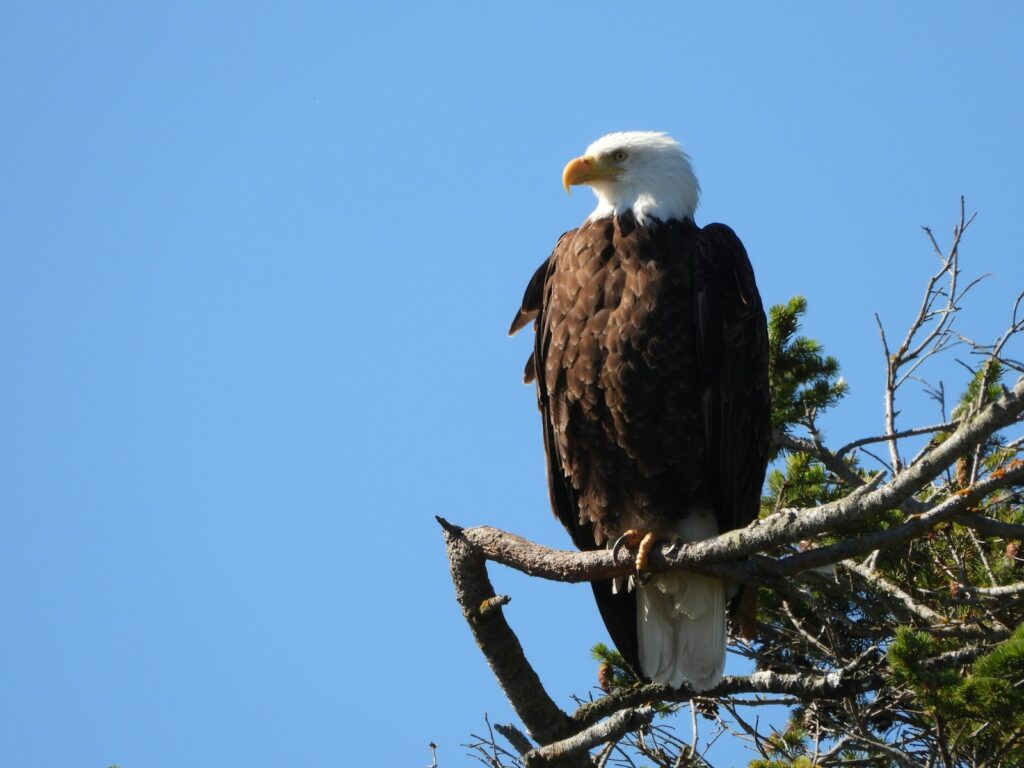
Nearly two and a half centuries after its selection, the bald eagle continues to resonate as America’s national symbol because it embodies enduring American ideals while adapting to changing national circumstances. Its initial selection reflected 18th-century aspirations toward strength and independence, while its near-extinction and recovery mirror the nation’s evolving relationship with the natural world. The eagle has transcended its origins as a heraldic device to become a living embodiment of American identity, capable of evoking patriotic sentiment across political divisions. When Americans witness a bald eagle soaring above a landscape—whether in person or through media—many report feeling a powerful emotional connection to their national heritage. This persistence and evolution of meaning demonstrate that the founders’ choice of the bald eagle was not merely successful for their time but has proven remarkably adaptable throughout American history.
Conclusion
The selection of the bald eagle as America’s national symbol was neither inevitable nor universally celebrated, but it has proven to be remarkably enduring and adaptive. From its formal adoption in 1782 to its presence on today’s currency, government buildings, and cultural artifacts, the eagle has remained a constant in American symbolic life while accommodating changing national values and circumstances. The bird’s journey—from contested symbol to endangered species to conservation success story—parallels America’s own development as a nation. As the United States continues to evolve and redefine itself in the 21st century, the bald eagle’s commanding presence in the American imagination suggests that this symbol, chosen in the nation’s infancy, will continue to inspire and represent the American people for generations to come.