

Few wildlife defense mechanisms are as notorious as the skunk’s pungent spray. This remarkable adaptation has earned skunks their fearsome reputation and provides them with effective protection despite their small size and relatively gentle nature. While most people associate skunks primarily with their powerful odor, many don’t realize that spraying is actually a carefully calculated last resort rather than a casual response to disturbances. Skunks have developed a sophisticated defensive strategy that includes multiple warning signals before they unleash their chemical weapon, demonstrating remarkable restraint in most encounters. Understanding how and why skunks spray reveals much about these misunderstood creatures and the complex ways animals have evolved to survive without relying on aggression as a first response.
The Chemistry Behind the Spray
Skunk spray contains several sulfur-based compounds called thiols (also known as mercaptans), with the primary components being butyl mercaptan, methyl mercaptan, and thioacetate derivatives. These chemicals are produced in specialized anal glands located on either side of the skunk’s rectum, with each gland capable of storing about a teaspoon (5 ml) of the potent liquid. When oxidized, these compounds produce an overwhelmingly powerful odor that can be detected by humans at concentrations as low as 10 parts per billion. The chemical composition is specifically evolved to trigger disgust and aversion responses in mammals, making it particularly effective against predators like coyotes, foxes, and domestic dogs. Interestingly, the spray itself is an oily, yellowish substance that can cause temporary blindness and nausea when it comes into direct contact with eyes or mucous membranes.
Anatomical Precision: The Spray Apparatus
Skunks possess a remarkably precise spray delivery system that demonstrates the sophistication of their defense mechanism. The two scent glands connect to nipple-like ducts that the skunk can aim independently, giving them surprising accuracy up to distances of 10-15 feet. Muscular control around these glands allows the skunk to spray in a fine mist, a directed stream, or even multiple bursts depending on the perceived threat level. This targeting ability means a skunk can hit a predator’s face with remarkable precision, even in darkness. The spray nozzles can be rotated in nearly any direction, allowing the skunk to spray effectively without changing its body position – an important feature that lets them maintain their warning stance while deploying their chemical defense.
The Escalating Warning System
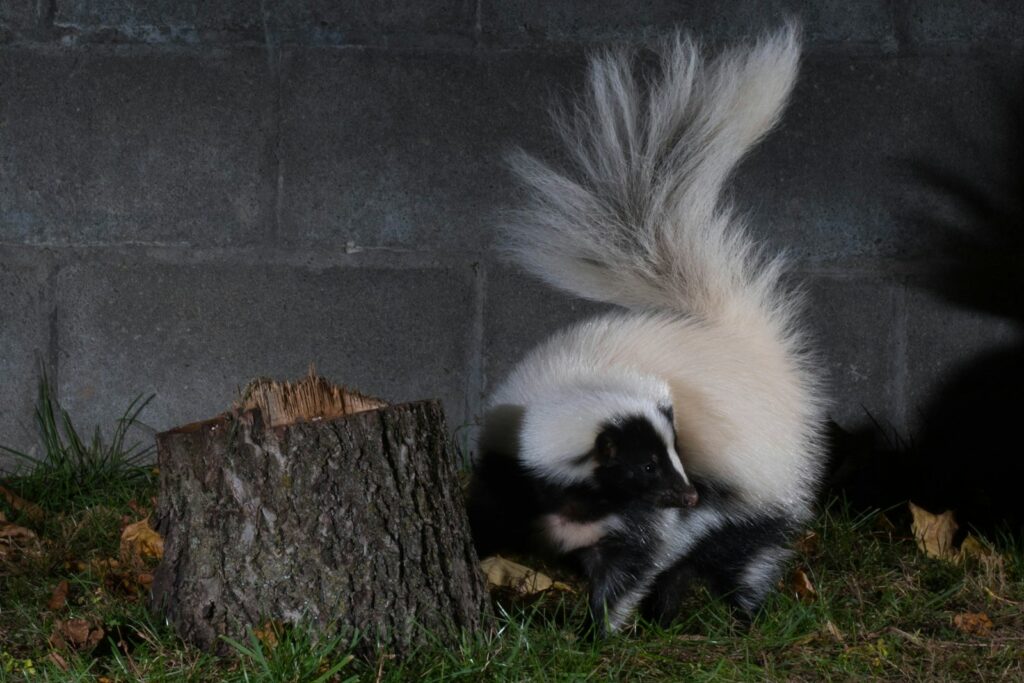
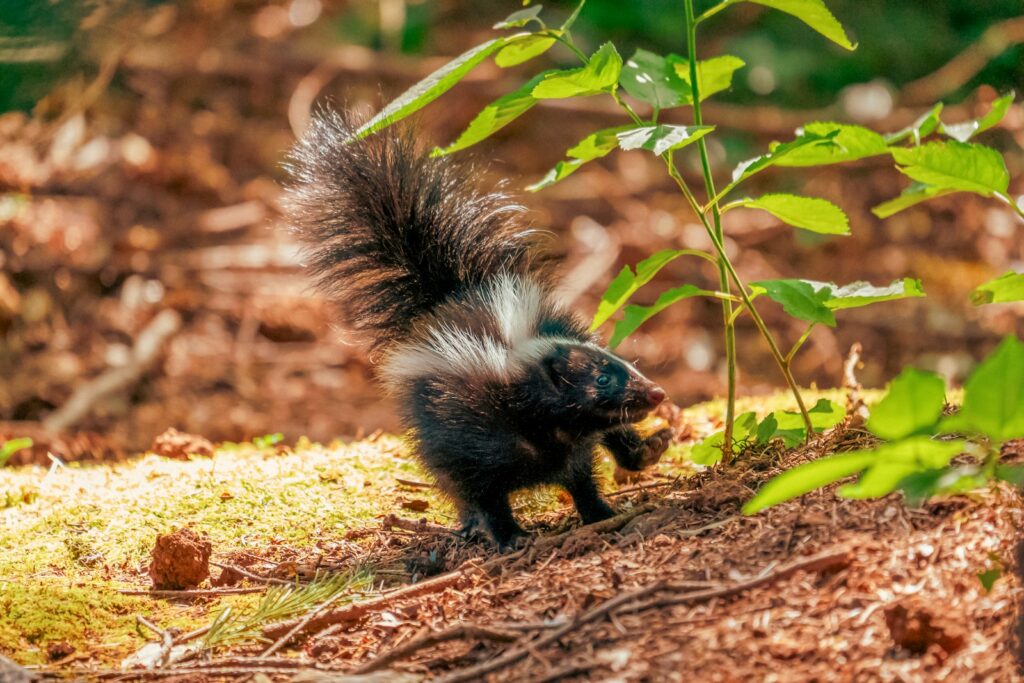
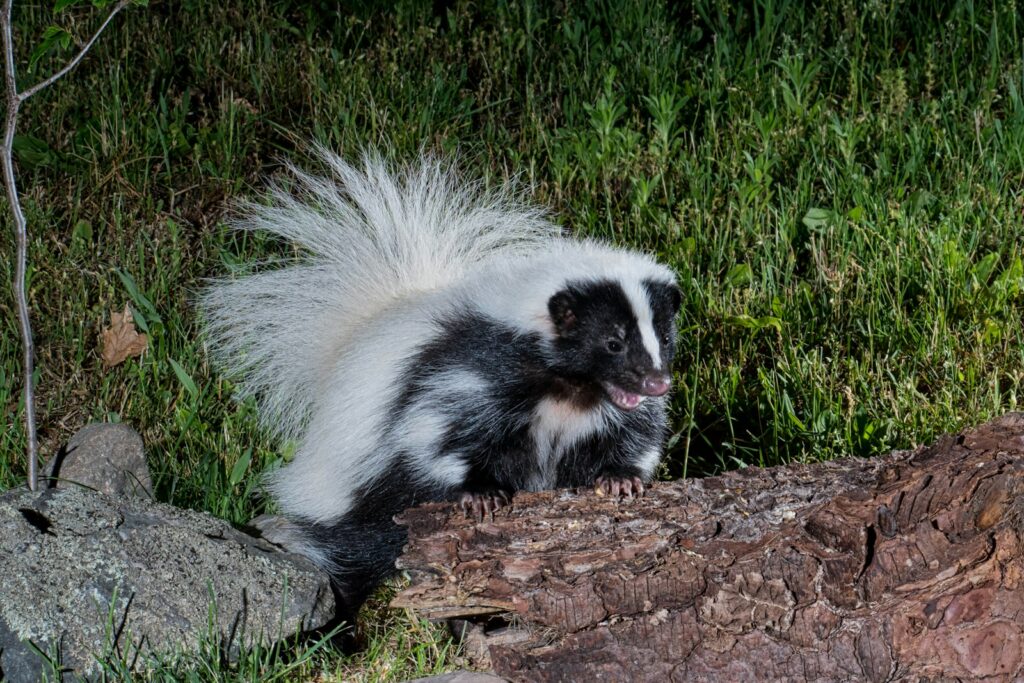
Contrary to popular belief, skunks don’t spray impulsively but instead follow a clear sequence of warning behaviors to avoid wasting their precious defensive resource. The warning system typically begins with the skunk freezing in place when it senses a potential threat, giving the approaching animal time to recognize it by its distinctive black and white coloration. If the threat continues, the skunk will often stamp its front feet rapidly, making a pattering sound on the ground as a more active warning. Should this fail to deter the predator, the skunk will raise its tail, arch its back, and often turn its body sideways while continuing to stomp – a clear indication that spraying may follow. Only after these multiple warning signs are ignored will the skunk finally resort to spraying, often aiming with surprising accuracy at the face of the perceived threat.
Conservation of a Limited Resource
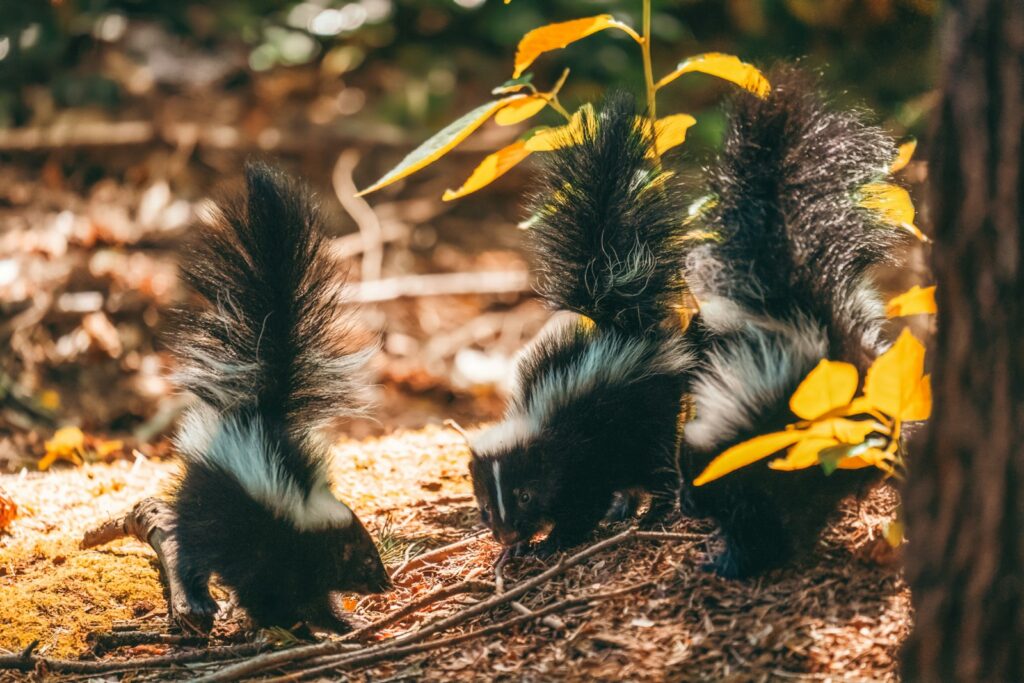
A skunk’s spray is a limited and valuable resource that requires significant time and energy to replenish, explaining why skunks are so reluctant to use it. After depleting their glands completely, a skunk needs approximately 10-14 days to fully replenish their supply, leaving them more vulnerable during this recovery period. The metabolic cost of producing the complex chemical mixture is considerable, requiring specialized protein production and energy resources that could otherwise be used for growth or reproduction. Young skunks are particularly careful with their spray, as their smaller glands hold less fluid and they may not yet have mastered the precise control needed for accurate targeting. This conservation necessity is why skunks have evolved such an elaborate warning system – it allows them to deter threats without depleting their chemical defense when possible.
The Role of Aposematic Coloration
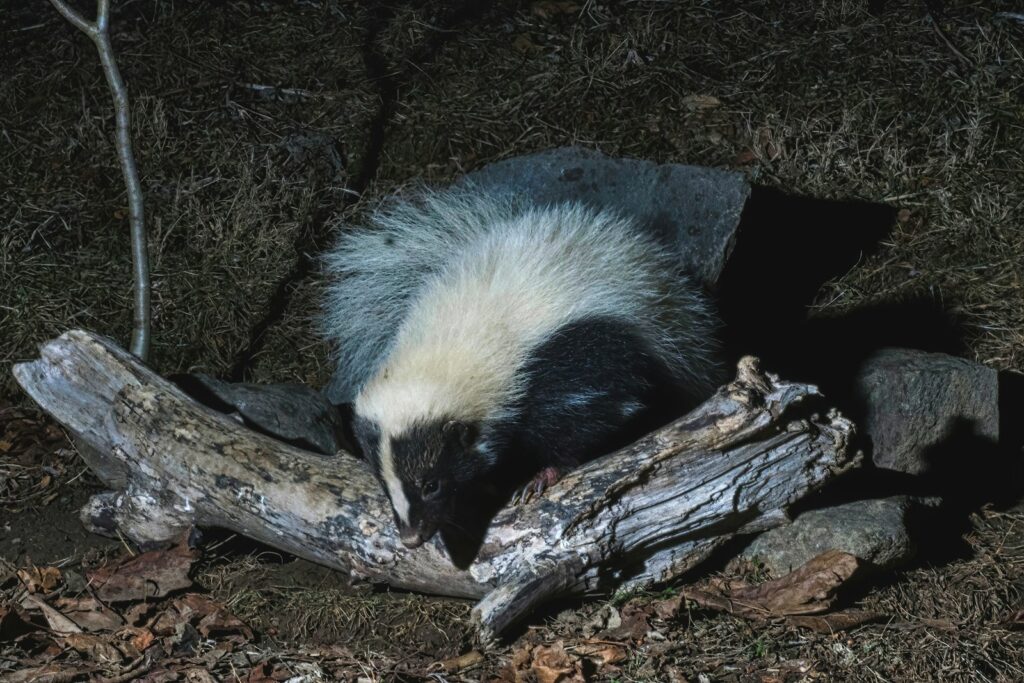
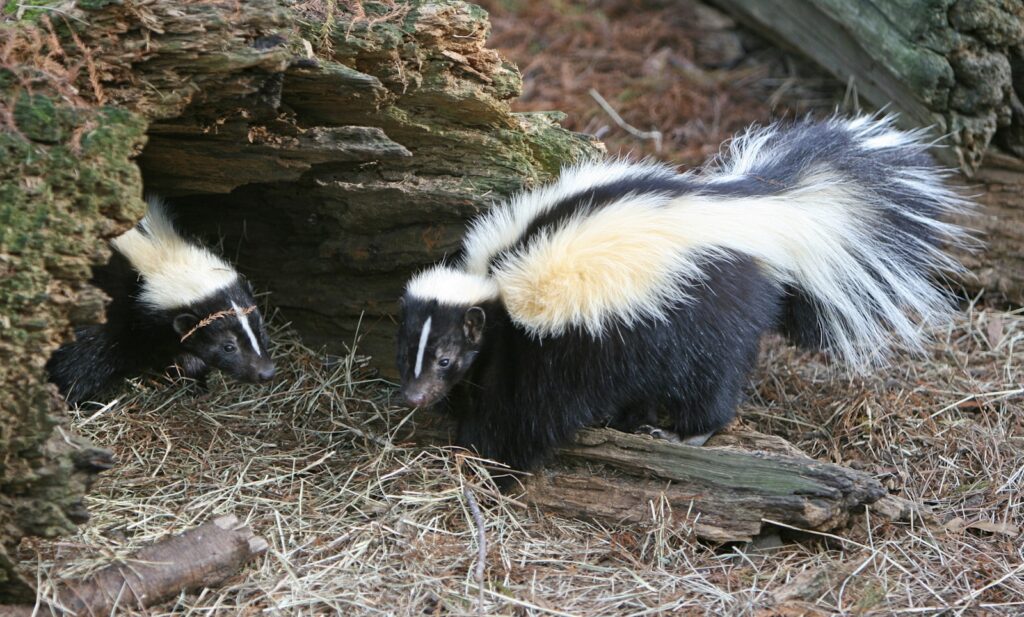
The skunk’s distinctive black and white pattern represents a perfect example of aposematic coloration – warning colors that signal potential danger to predators. The bold, contrasting pattern of white stripes against black fur creates a highly visible warning sign that can be recognized even in low light conditions. This coloration serves as the first line of defense, essentially communicating “stay away” to animals that might otherwise consider the skunk prey. Research has shown that predators can learn to associate this distinctive pattern with the unpleasant spray experience after just one encounter, creating a powerful learned avoidance. The effectiveness of this visual warning system is so strong that several other harmless animals, including certain species of hognose snakes and some caterpillars, have evolved to mimic skunk coloration to benefit from predator avoidance without actually possessing chemical defenses.
Predators That Disregard the Warning
Despite the skunk’s elaborate defense system, certain predators have developed strategies to hunt them successfully. Great horned owls represent the skunk’s most significant natural predator, as these birds have almost no sense of smell and can attack from above, avoiding the directed spray. Larger predators such as mountain lions and bears occasionally hunt skunks, though they typically avoid them when other prey is available. Some evidence suggests that coyotes hunting in groups have developed cooperative techniques where one animal provokes the skunk into spraying while others attack from behind after the spray is depleted. Domestic dogs, however, rarely learn to avoid skunks despite repeated encounters, possibly because their close association with humans has reduced the selective pressure to avoid noxious prey.
Immunity and Adaptation Among Species
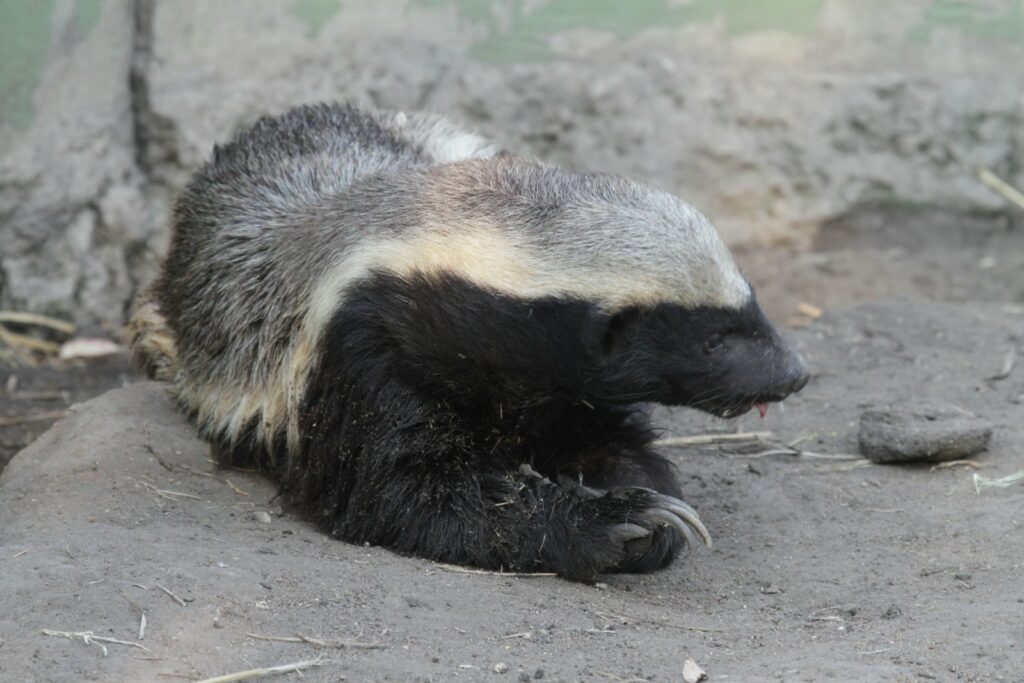
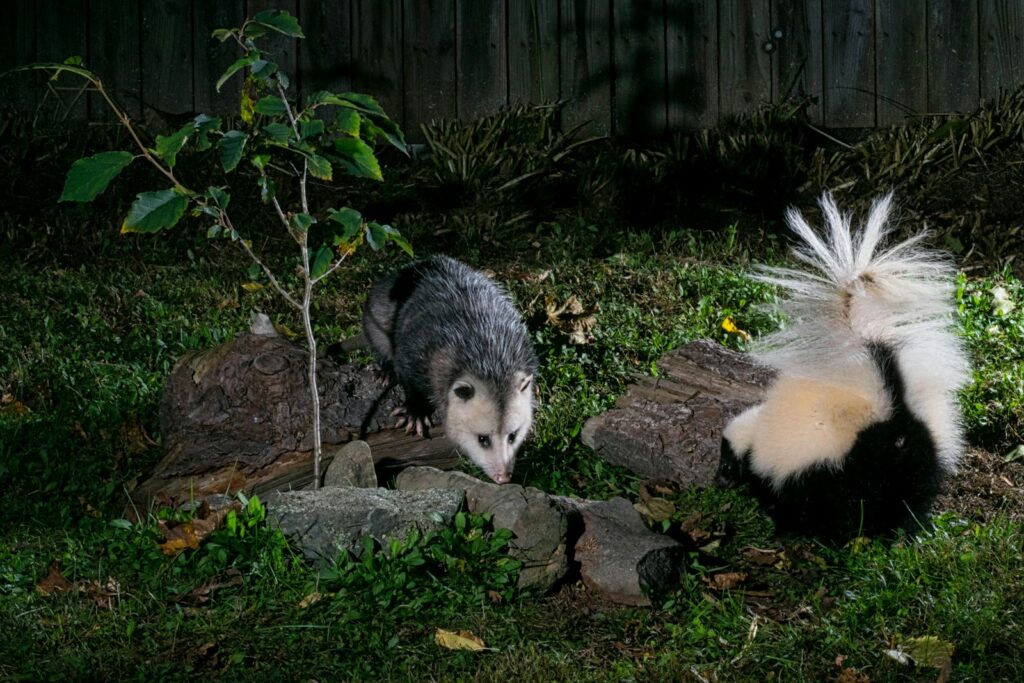
Certain animals display varying degrees of immunity or tolerance to skunk spray, representing an evolutionary arms race between predator and prey. Badgers, which are related to skunks but lack their chemical defense, show a notably reduced response to the spray and occasionally prey on skunks despite their defense mechanism. Opossums also demonstrate a relative tolerance, possibly due to their generalist diet that includes many strong-smelling food sources. Some snake species appear almost completely unaffected by the spray, likely because their less-developed olfactory systems process the thiols differently than mammals do. These exceptions to the spray’s effectiveness illustrate the continuous evolutionary adaptations occurring between predators and prey, where chemical defenses and tolerance mechanisms evolve in response to each other.
Behavioral Differences Among Skunk Species
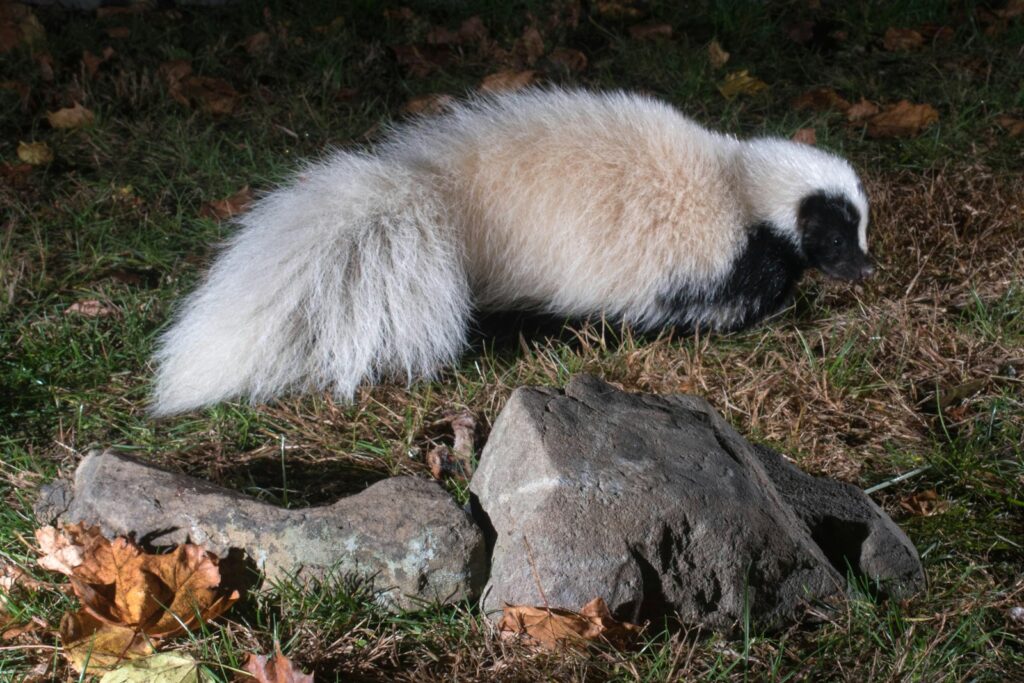
The world’s dozen skunk species show fascinating variations in their spraying behavior and warning displays. The spotted skunk, smaller than the common striped skunk, performs a distinctive handstand as part of its warning display, balancing on its front paws with its tail and hindquarters raised high in an impressive feat of intimidation. Hog-nosed skunks tend to resort to spraying more quickly than other species, possibly due to their different ecological niche and predator pressures. The hooded skunk of Mexico and the southwestern United States often relies more heavily on its first warning stages and may flee rather than spray when possible. These behavioral differences likely evolved in response to the specific predators and environments each species encounters, demonstrating how a general defense strategy can be fine-tuned through natural selection to suit particular ecological circumstances.
Skunk Spray in Urban Encounters
As human development expands into natural habitats, skunks have proven remarkably adaptable to urban and suburban environments, leading to increased human-skunk encounters. Urban skunks often display a higher tolerance for human proximity before initiating their warning sequence, having learned that humans typically pose no direct threat. Domestic dogs, however, account for the vast majority of spraying incidents in populated areas, as they often approach skunks with curiosity or aggression while ignoring warning signals. Research indicates that urban skunks may spray more selectively than their rural counterparts, possibly conserving their spray in environments where they encounter potential threats more frequently. Wildlife rehabilitation experts note that urban skunks sometimes develop modified warning behaviors specific to human environments, such as becoming more vocal or using artificial structures as part of their warning displays.
Juvenile Development of Spray Behavior
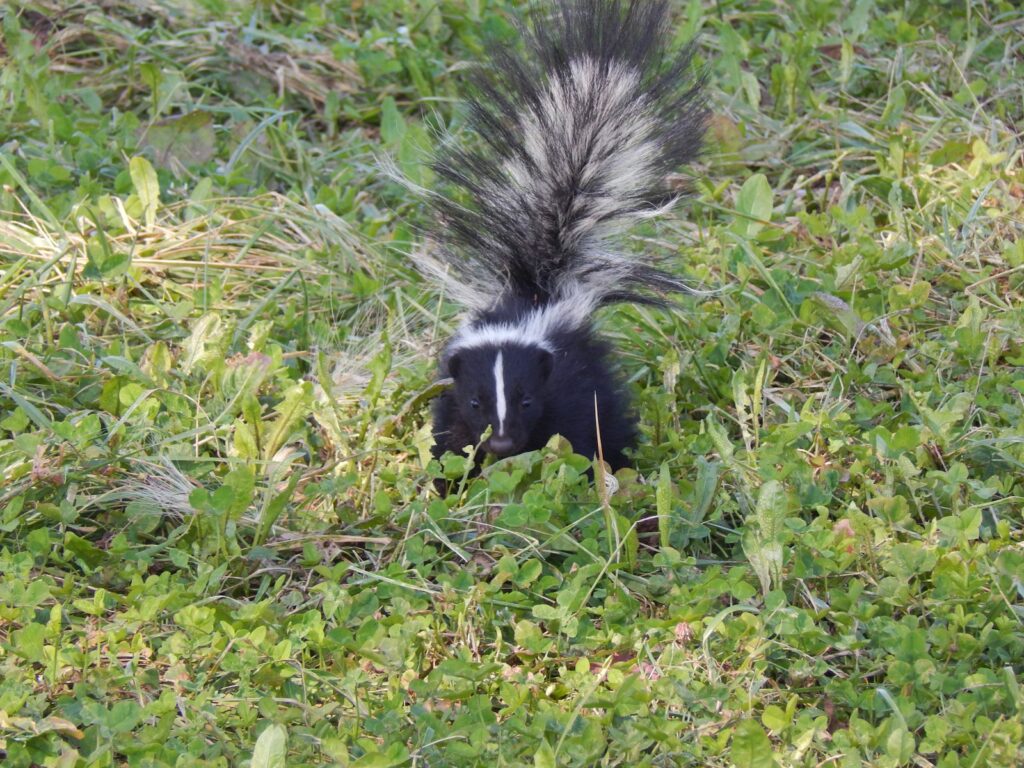
Young skunks undergo a fascinating developmental process as they learn to use their spray defense effectively. Newborn skunks possess functional scent glands but lack the muscular control and judgment to deploy their spray accurately, occasionally releasing small amounts accidentally when startled. By approximately eight weeks of age, kits begin practicing their warning displays, often engaging in play behaviors that mimic the foot-stamping and tail-raising they’ll use as adults. Mother skunks appear to demonstrate proper warning sequences, which the young observe and imitate, though there’s still debate among researchers about how much of the behavior is learned versus innate. Juvenile skunks typically don’t gain full control over their spray apparatus until they’re approximately three to four months old, coinciding with the time they begin foraging independently from their mother.
Misconceptions About Skunk Spraying
Several persistent myths about skunk spraying behavior continue to circulate despite scientific evidence to the contrary. One common misconception is that skunks can’t spray unless their tail is raised, when in fact they have full capability to spray from nearly any position, including while running or even swimming. Another widespread belief is that skunks will spray at any slight disturbance, when research clearly documents their reluctance to use this defense except as a last resort. Some people incorrectly assume that skunks become “immune” to their own spray, while the truth is that they naturally avoid spraying themselves through precise anatomical control and behavioral adaptations. Perhaps the most dangerous misconception is that removing a skunk’s scent glands is a simple procedure similar to declawing a cat, when in reality it’s a complex surgery requiring specialized veterinary knowledge and is considered inhumane by most wildlife experts.
The Lasting Power of Skunk Spray

The remarkable persistence of skunk spray contributes significantly to its effectiveness as a deterrent. Untreated, the odor can remain perceptible for weeks or even months depending on environmental conditions and the surfaces affected. The thiols in skunk spray bind chemically to proteins in fur, hair, and fabric, creating a stable compound that resists normal washing and weathering. Under certain conditions, particularly high humidity, the smell can seem to reactivate or intensify as moisture interacts with the chemical compounds. The longevity of the odor serves an important ecological function, as it leaves a lingering warning to potential predators well beyond the immediate encounter. This persistent quality also explains why natural selection has favored skunks that use their spray judiciously – the consequences of unnecessary spraying could include attracting secondary predators or compromising the skunk’s own ability to hunt inconspicuously.
Remedies and Neutralization Science
The chemistry behind neutralizing skunk spray reveals much about its unique properties and evolutionary adaptation. Traditional remedies like tomato juice don’t actually neutralize the odor but instead temporarily overwhelm the human olfactory system with a competing smell, a phenomenon known as olfactory fatigue. Effective neutralization requires oxidizing the thiols into less volatile compounds, which is why solutions containing hydrogen peroxide, baking soda, and liquid soap work most effectively. These mixtures convert the thiols into sulfonic acids, which lack the intensely offensive odor of the original compounds. Commercial products designed specifically for skunk odor remediation typically contain enzymes that break down the thiol bonds or oxidizing agents similar to homemade solutions. The difficulty in completely eliminating skunk odor stands as testament to the evolutionary sophistication of this defense mechanism – even our most advanced chemistry struggles to fully counteract what nature has perfected over millions of years.
Understanding the skunk’s spray defense reveals a remarkable example of evolutionary refinement – a defense system that combines visual warning, behavioral displays, and chemical weaponry in a carefully orchestrated sequence. Far from the trigger-happy sprayers of popular imagination, skunks demonstrate impressive restraint, deploying their powerful chemical defense only when their multiple warnings go unheeded. This sophisticated approach to self-preservation has served skunks well, allowing these relatively small mammals to thrive across diverse habitats with minimal need for physical confrontation. The next time you encounter a skunk with its tail raised, appreciate that you’re witnessing not just a threat, but a communication from an animal doing everything possible to avoid conflict while still ensuring its own safety – a masterclass in effective deterrence that humans would do well to respect.