

The majestic bald eagle, America’s national symbol, is renowned not just for its impressive appearance but for its extraordinary hunting prowess. Soaring high above lakes, rivers, and forests, these remarkable birds can detect potential meals from astonishing distances. Their legendary visual acuity—among the sharpest in the animal kingdom—allows them to spot fish swimming beneath water surfaces or small mammals scurrying through fields from heights that would render such prey invisible to human eyes. This remarkable vision isn’t just a product of exceptional eyesight; it’s a sophisticated system developed through evolutionary adaptations, specialized structures, and hunting behaviors that collectively make the bald eagle one of nature’s most efficient aerial predators.
The Extraordinary Visual System of Bald Eagles
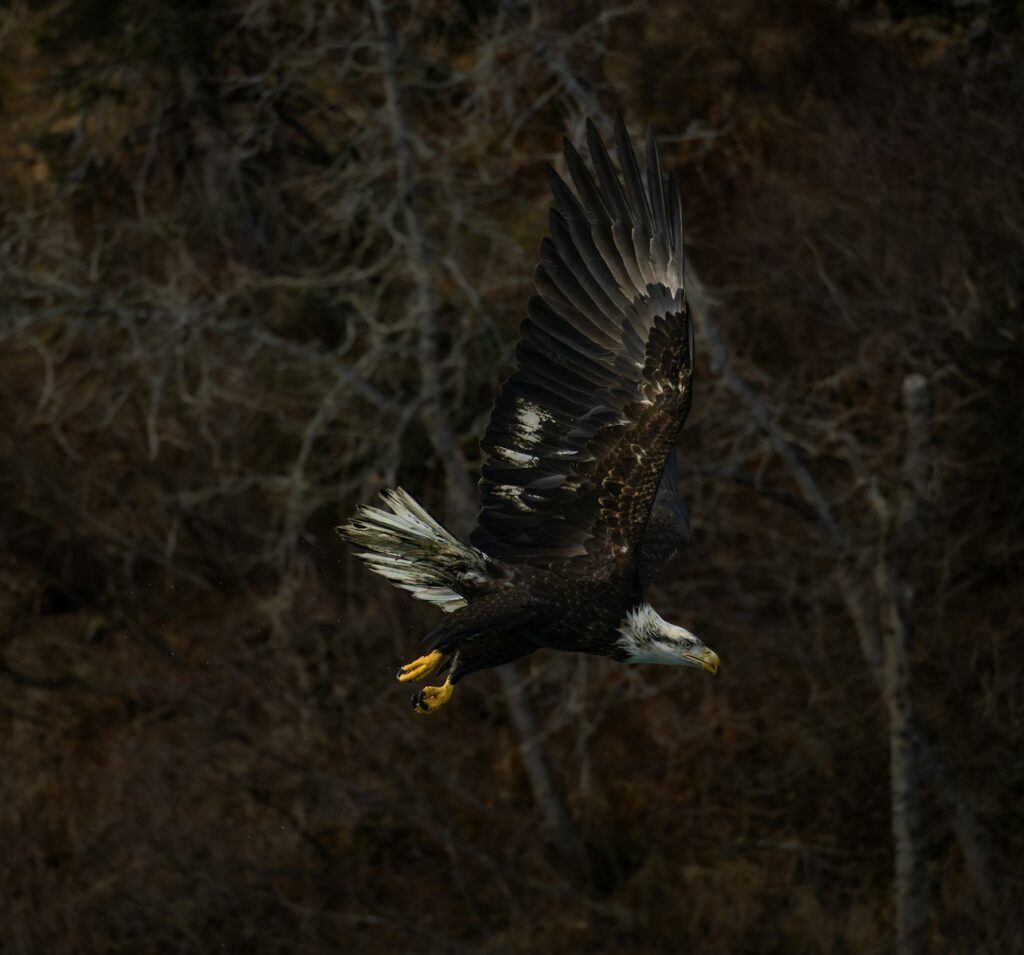
Bald eagles possess one of the most remarkable visual systems in the animal kingdom, perfectly adapted for spotting prey from great heights. Their eyes are disproportionately large relative to their head size, accounting for about 15% of the weight of the eagle’s entire head, while human eyes represent just 1% of our head weight. These oversized eyes contain approximately five times more visual cells per area than human eyes, allowing for incredibly detailed vision. Additionally, eagle eyes contain specialized structures called foveae (areas of highest visual acuity) that are much more densely packed with light-receptive cells than those found in humans. This extraordinary visual apparatus enables bald eagles to detect prey from altitudes exceeding 10,000 feet—a capability that defines their hunting strategy and ecological role.
Comparing Eagle Vision to Human Eyesight
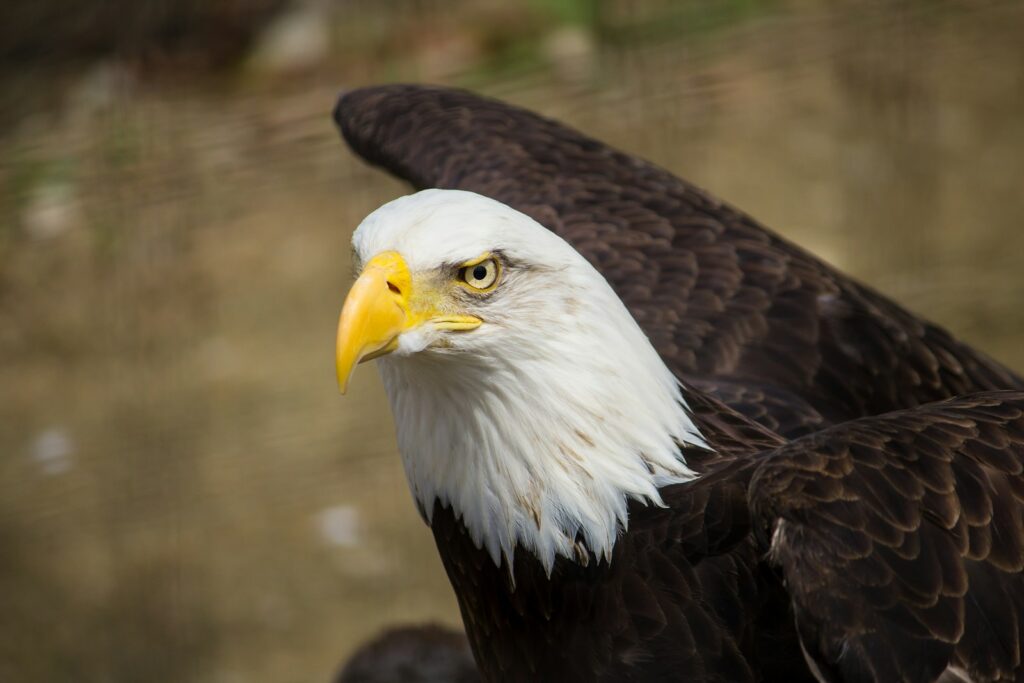
The visual acuity of bald eagles dramatically outperforms human vision in several key aspects. While humans with perfect 20/20 vision can see details at 20 feet that should normally be visible at this distance, bald eagles possess vision estimated at 20/5 or even 20/4—meaning they can see clearly from 20 feet what humans would need to be at 4-5 feet away to discern. In practical terms, an eagle flying at 1,000 feet can spot prey over an area of approximately three square miles. Eagles can also perceive a significantly wider color spectrum than humans, including ultraviolet light, which helps them track urine trails of prey animals that reflect UV light. Their ability to detect polarized light also reduces glare when hunting over water, giving them a substantial advantage when fishing compared to human fishermen.
Anatomical Adaptations for Superior Vision
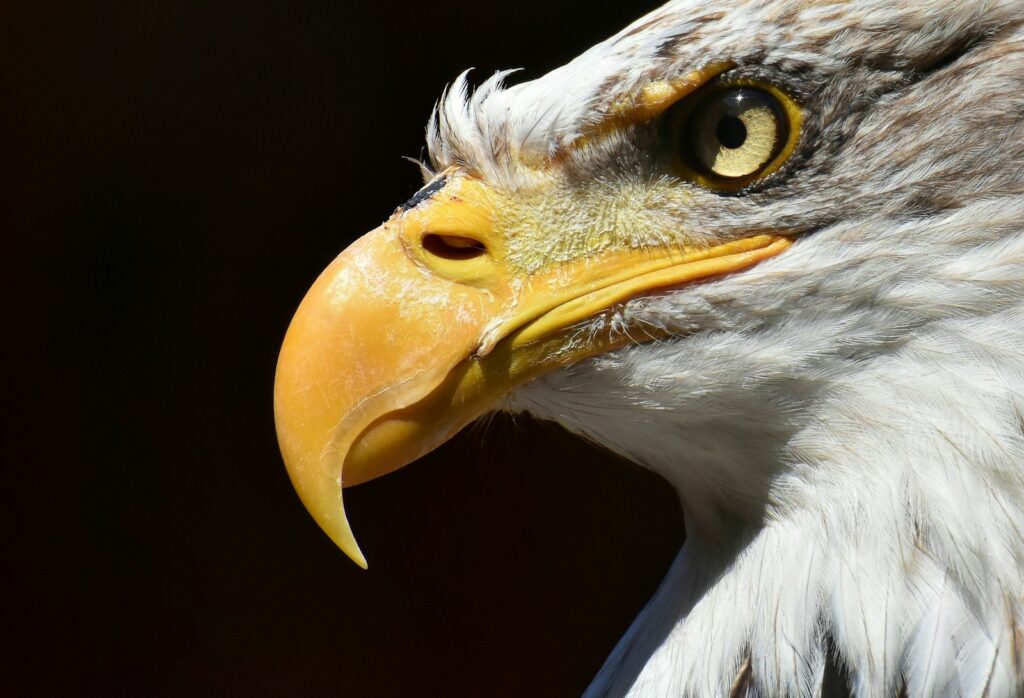
The bald eagle’s eyes contain several specialized anatomical features that contribute to their extraordinary visual capabilities. Unlike humans, eagles possess a flatter eyeball shape that creates a larger image on their retina, essentially functioning like built-in telephoto lenses. Their eyes contain approximately one million light-sensitive cells per square millimeter of retina, compared to 200,000 in humans, dramatically increasing visual resolution. Another remarkable adaptation is the presence of two foveae in each eye (compared to humans’ single fovea), with one specialized for forward vision and another for side vision, allowing eagles to simultaneously focus clearly on objects in different fields of view. The eagles’ lens can change shape more rapidly than human lenses, allowing for quick focusing adjustments as they dive toward prey from great heights.
How Eagles Process Visual Information
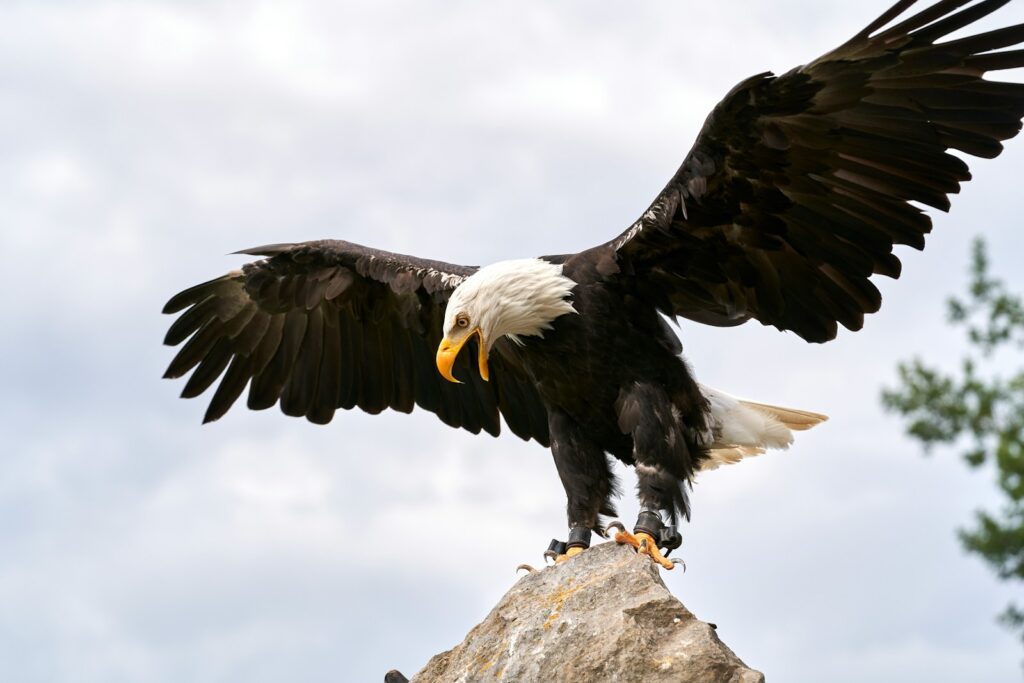
The visual processing capabilities of bald eagles represent a marvel of neurological specialization. Their brains dedicate substantially more neural resources to visual processing than humans, with visual centers that are proportionately larger and more complex. Eagles process visual information at a rate approximately five times faster than humans, enabling them to track rapidly moving prey with remarkable precision. This processing speed proves particularly valuable when hunting fish, as eagles must account for light refraction in water, which makes fish appear to be in a different position than they actually are. Their brains also excel at motion detection, with specialized neurons that respond specifically to the movement patterns typical of their preferred prey, allowing them to quickly distinguish potential meals from the surrounding environment even at extreme distances.
The Role of Eagle Eyes in Hunting Strategy
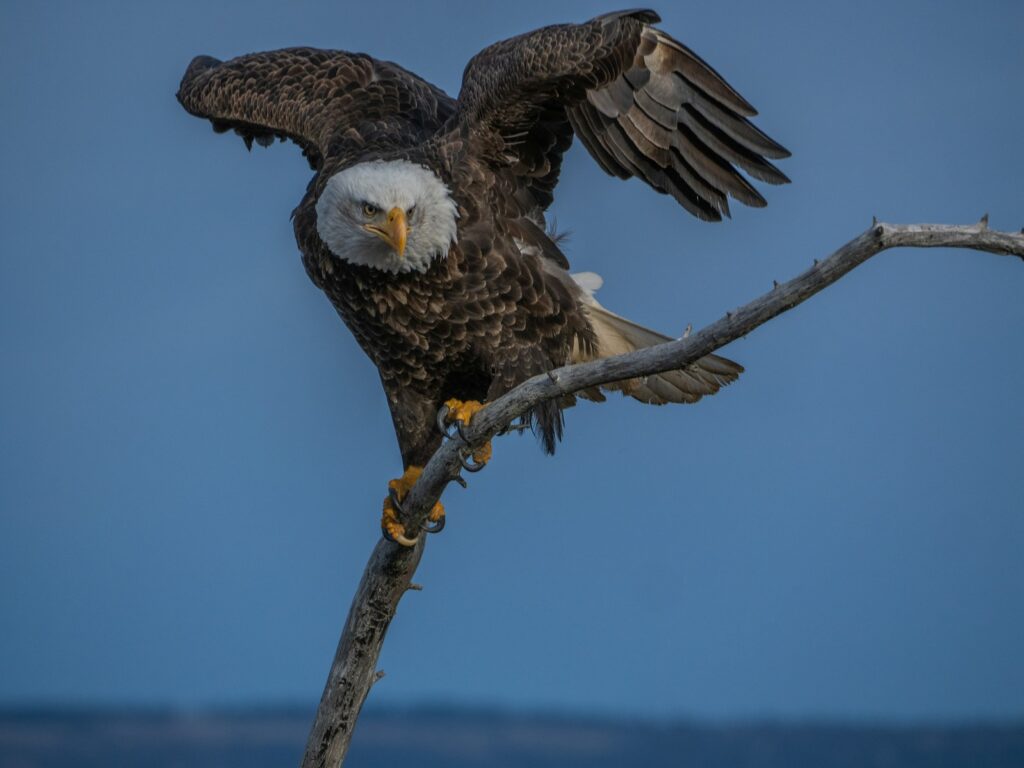
Bald eagles have developed sophisticated hunting strategies that capitalize on their exceptional vision. They typically soar at altitudes between 500 and 4,000 feet, methodically scanning vast areas with minimal energy expenditure, using their extraordinary vision to detect the slightest movements or color contrasts below. Once potential prey is spotted, eagles will often circle to assess the situation before initiating a carefully calculated dive, reaching speeds over 100 mph while maintaining precise visual focus on their target. Their hunting patterns frequently involve utilizing favorable lighting conditions, with many eagles preferring to hunt with the sun at their back to reduce glare while potentially blinding their prey. Eagles also demonstrate remarkable visual memory, often returning to successful hunting grounds and utilizing the same perches for optimal viewing angles over productive waters.
Vision Adaptations for Aquatic Prey Detection

Bald eagles have evolved specific visual adaptations that make them exceptionally effective at spotting and capturing fish, their preferred prey. Their eyes contain specialized oil droplets that act as natural polarizing filters, significantly reducing glare from water surfaces that would otherwise interfere with their ability to spot fish swimming below. Eagle retinas possess a higher concentration of cones (color-detecting cells) sensitive to the blue-green wavelengths that penetrate water most effectively, enhancing their ability to detect movement and contrast beneath the water’s surface. Their visual system also includes exceptional depth perception, allowing them to accurately judge the distance to fish swimming at various depths—crucial for timing their dramatic hunting dives. Additionally, eagles possess nictitating membranes (transparent eyelids) that protect their eyes during dives while maintaining visual contact with prey, functioning like built-in swimming goggles.
Detecting Land-Based Prey from Afar
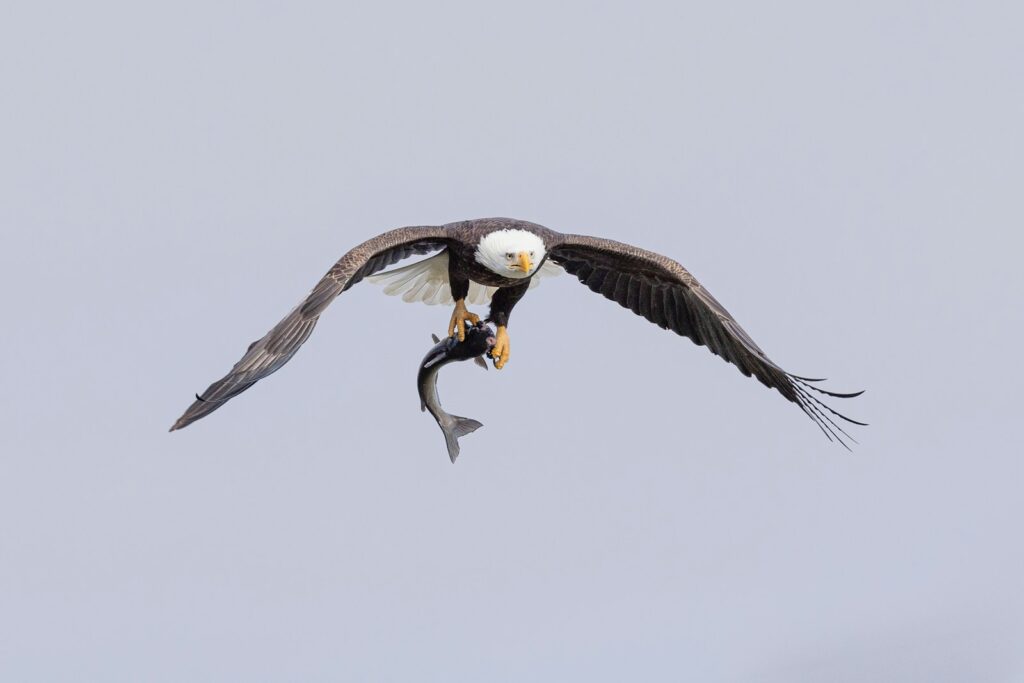
While fish comprise the majority of the bald eagle’s diet, their extraordinary vision also makes them effective hunters of land-based prey, particularly when fish are scarce. Their remarkable ability to detect subtle color differences allows them to spot the fur of rabbits, squirrels, and other small mammals against complex backgrounds of vegetation from distances exceeding half a mile. Eagles hunting over land demonstrate a particular sensitivity to movement, with their visual system capable of detecting even the slight motions of a rodent from tremendous heights. Their exceptional vision allows them to hunt in various light conditions, including dawn and dusk when many prey animals are active but visibility is challenging for other predators. Some research suggests eagles may be able to detect the ultraviolet reflection from rodent urine trails, giving them additional visual information about where prey might be located.
How Weather and Environmental Conditions Affect Eagle Vision

Weather and environmental conditions significantly impact the hunting effectiveness of bald eagles, even with their remarkable vision. Precipitation poses particular challenges, with heavy rain or snow reducing visibility and forcing eagles to fly at lower altitudes or temporarily suspend hunting. Fog presents perhaps the greatest visual challenge, as it can render the eagles’ long-distance vision nearly useless, often leading to changed hunting patterns or temporarily switching to scavenging behavior. Wind conditions also play a crucial role, with moderate headwinds actually improving hunting success by providing greater stability during soaring and allowing eagles to hover more effectively while scanning for prey. Interestingly, many eagles adapt to seasonal changes in visibility conditions by adjusting their hunting territories, moving to areas with clearer air or better contrast between prey and background.
Vision Development in Eagle Chicks
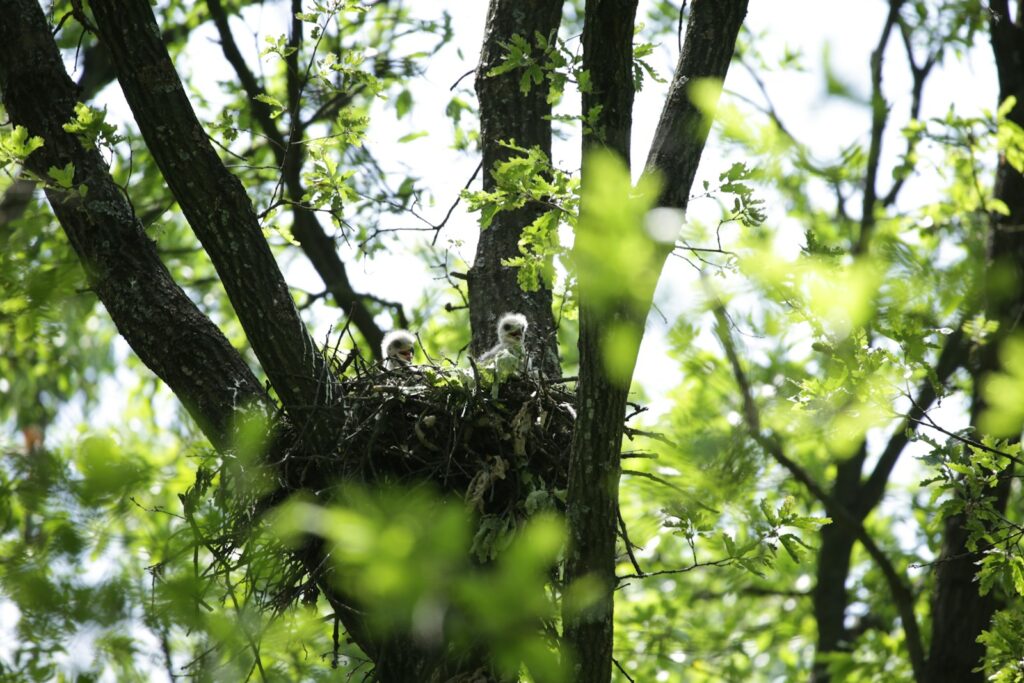
The remarkable visual capabilities of bald eagles don’t appear instantaneously—they develop progressively during the eaglet’s growth. Newborn eaglets have limited vision, with eyes that remain partially closed for the first few days of life and vision that is initially blurry and monochromatic. Their visual acuity improves dramatically between weeks three and eight, coinciding with significant brain development in visual processing regions. Young eagles begin practicing critical visual skills long before they attempt their first flights, tracking moving objects around the nest and focusing on increasingly distant landmarks. The period between fledging (leaving the nest) and independence is crucial for visual development, as juvenile eagles refine their hunting vision through observation of parents and numerous practice attempts at spotting and striking prey. Research indicates that full adult visual capabilities aren’t completely developed until eagles reach sexual maturity at around four to five years of age.
Threats to Eagle Vision in the Modern World
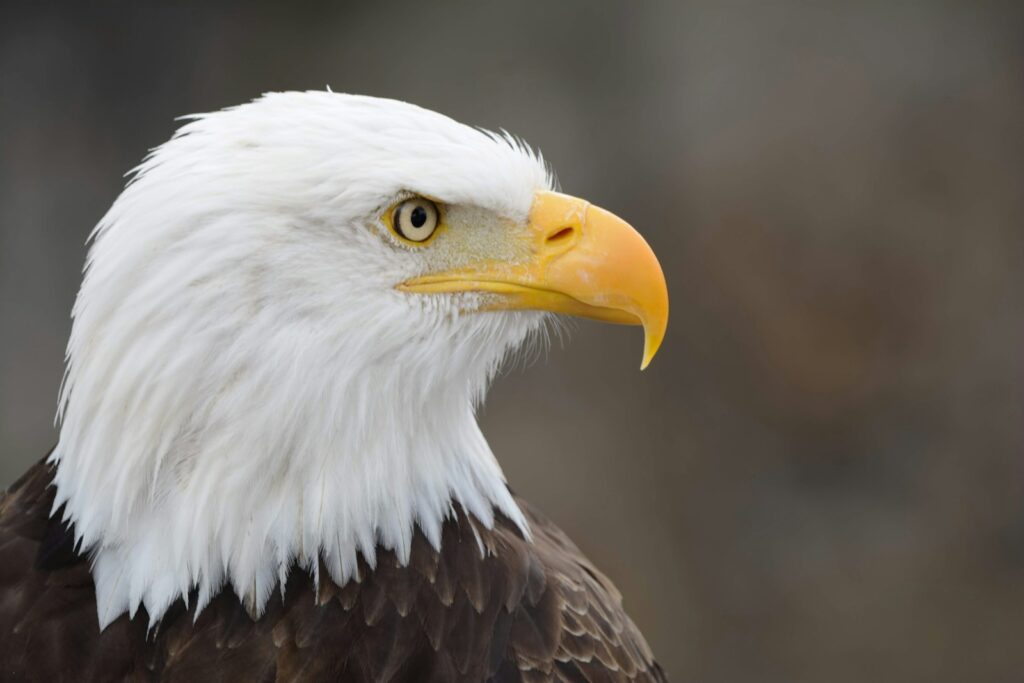
Despite their extraordinary visual capabilities, bald eagles face several modern threats that can compromise their eyesight and hunting success. Environmental contaminants, particularly mercury and lead, can cause significant damage to eagle vision, with lead poisoning from ingested bullet fragments in scavenged carcasses being particularly problematic. Human development has introduced hazards like power lines, which eagles may not see while focusing on prey below, resulting in collisions that can cause eye injuries or death. Light pollution in developing areas can disrupt natural hunting patterns by creating unnatural glare on water surfaces or confusing the eagles’ sensitive visual system. Climate change presents an emerging threat, as increasing water turbidity from extreme weather events reduces underwater visibility, potentially forcing eagles to expend more energy hunting or switch to less nutritious food sources.
Conservation Efforts Protecting Eagle Eyesight

Conservationists have implemented several measures specifically designed to protect the vision-based hunting abilities of bald eagles. Water quality protection efforts are particularly important, as clearer water improves hunting success rates by enhancing the eagles’ ability to spot fish from above. Programs promoting the use of non-lead ammunition for hunters have gained traction, directly reducing the risk of lead poisoning that can damage eagle eyesight. Habitat preservation efforts focus on maintaining mature trees around waterways that serve as ideal hunting perches, allowing eagles to conserve energy while using their exceptional vision to scan for prey. Some wildlife rehabilitation centers now specialize in treating eye injuries in eagles, using advanced veterinary ophthalmology techniques to restore vision to injured birds whenever possible.
Scientific Research and New Discoveries About Eagle Vision
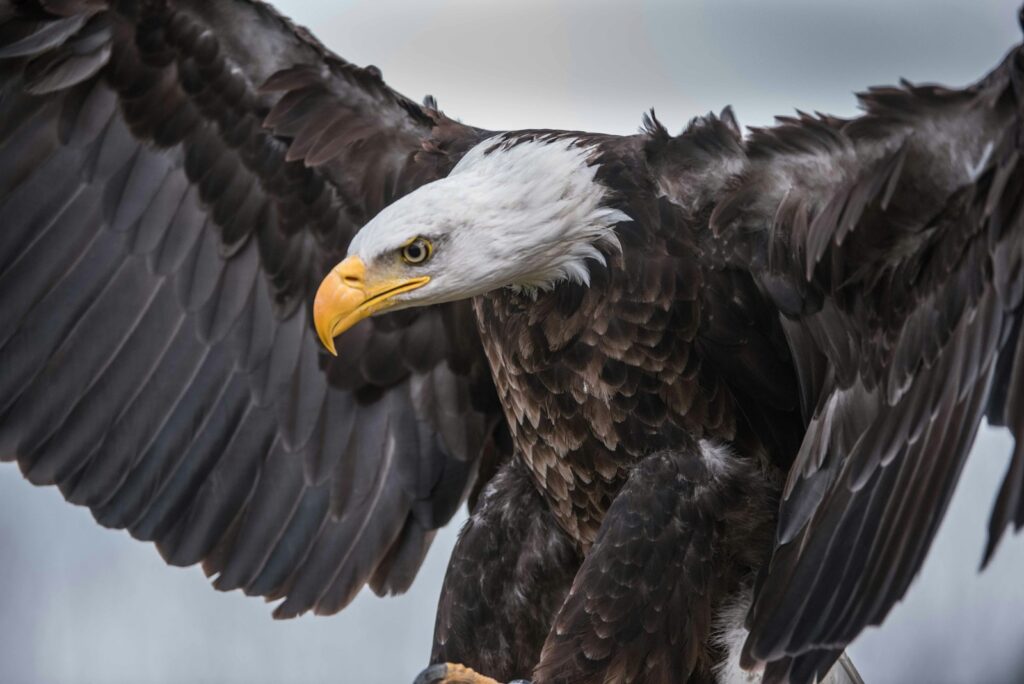
Ongoing scientific research continues to reveal fascinating new aspects of bald eagle vision. Recent studies using sophisticated eye-tracking technology have demonstrated that eagles employ systematic scanning patterns when hunting, rather than random searching, maximizing the efficiency of their visual surveying. Neurological research has identified specialized brain structures unique to eagles that filter and enhance visual information related to potential prey characteristics like size, shape, and movement patterns. Comparative studies examining eagle vision across different age groups have revealed that older eagles compensate for minor age-related visual decline by relying more heavily on experience and refined hunting techniques. Perhaps most intriguingly, new research suggests bald eagles may possess limited sensitivity to thermal radiation, potentially giving them a slight ability to detect the body heat of prey under certain conditions—though this capability remains far less developed than their extraordinary visual system.
Eagle Vision in Cultural and Historical Context

The extraordinary vision of eagles has been recognized and venerated throughout human history, becoming embedded in cultural understandings across civilizations. Native American traditions have long revered the eagle’s vision, with numerous tribes considering eagles to be spiritual messengers precisely because their vision allowed them to fly close to the heavens while still seeing earth clearly. Ancient Roman military standards featured eagle imagery specifically because the bird’s keen eyesight symbolized vigilance and far-seeing leadership. The phrase “eagle-eyed” entered the English language in the 1600s, specifically referencing someone with exceptional observational abilities. Even in modern contexts, the bald eagle’s vision has inspired technological innovations, with aspects of their visual system informing the development of advanced camera systems and military surveillance equipment that attempt to replicate their remarkable ability to detect small objects at extreme distances.
Conclusion
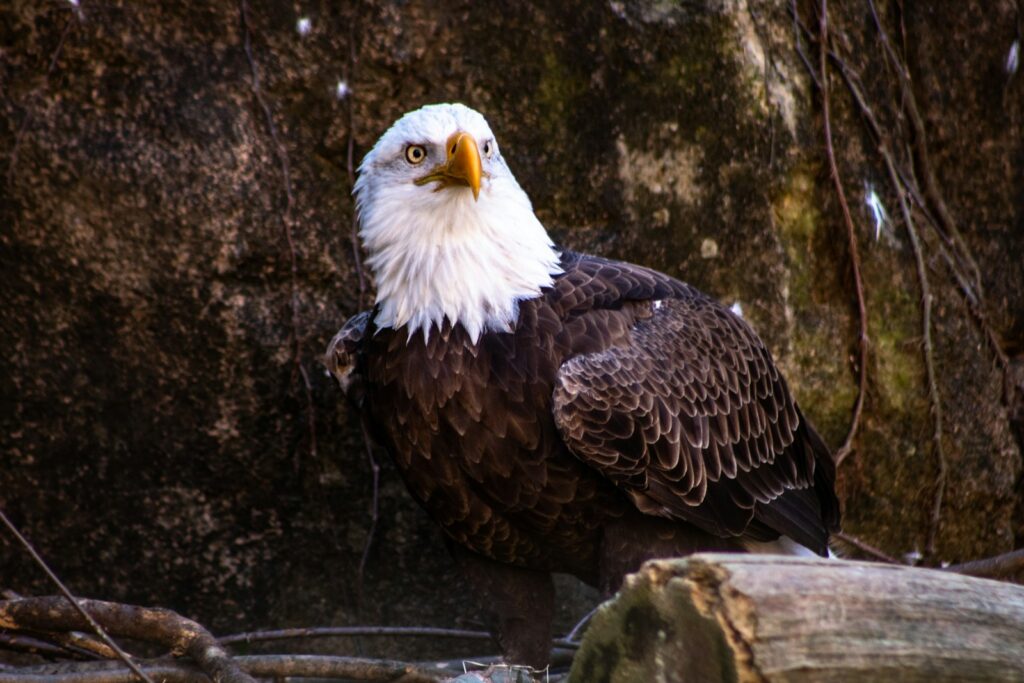
The bald eagle’s extraordinary visual capabilities represent one of nature’s most impressive sensory adaptations, allowing these magnificent birds to detect prey from distances that seem almost supernatural to human observers. Their specialized eye structure, enhanced visual processing, and refined hunting strategies all contribute to their remarkable success as aerial predators. While facing new challenges in the modern world, conservation efforts continue to protect these birds and their crucial hunting abilities. As science uncovers more details about eagle vision, we gain not only a deeper appreciation for these magnificent predators but also inspiration for technological innovations that might someday approach—though likely never match—the remarkable visual prowess that allows bald eagles to spot their next meal from miles away.