
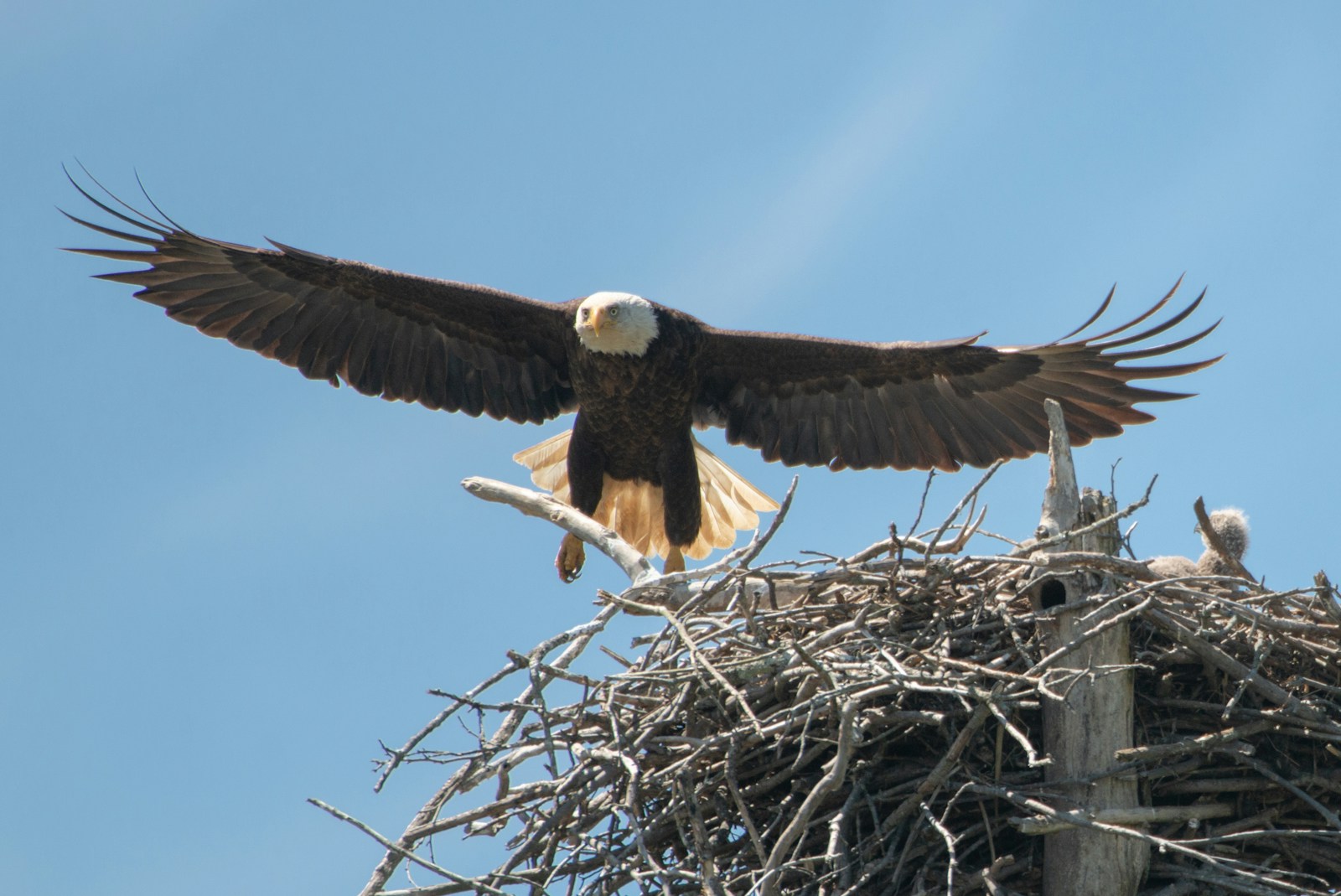
The majestic bald eagle, America’s national bird and a symbol of freedom and strength, has been making a remarkable comeback across the United States in recent decades. Once endangered and on the brink of extinction, these magnificent raptors are now reclaiming territories they abandoned long ago, returning to old nesting grounds and establishing new generations in areas where they haven’t been seen for half a century or more. This resurgence represents one of the greatest wildlife conservation success stories in American history and offers valuable insights into ecosystem recovery, wildlife management, and the resilience of nature when given proper protection. The return of bald eagles to their ancestral territories isn’t just a win for the species – it’s a testament to what can be accomplished when science, policy, and public support align to protect our natural heritage.
The Historic Decline of Bald Eagles

The story of bald eagles in America is one of dramatic decline followed by an inspiring recovery. In the mid-20th century, bald eagle populations plummeted due to a combination of habitat destruction, hunting, and most significantly, the widespread use of DDT pesticide. This chemical contaminated waterways and accumulated in fish, which eagles consumed, causing them to lay eggs with shells so thin they often broke before hatching. By 1963, the situation had become so dire that only 417 nesting pairs remained in the lower 48 states, compared to an estimated population of 100,000 eagles in the late 1700s. Many historic nesting grounds that had been used for generations were abandoned as eagles disappeared from vast portions of their range. The species that had proudly served as the national emblem since 1782 was facing extinction throughout much of its native habitat, a sobering reminder of humanity’s impact on wildlife.
Legislative Protection: The Road to Recovery

The bald eagle’s road to recovery began with crucial legislative action that offered the necessary protection for the species to rebound. The Bald and Golden Eagle Protection Act of 1940 was the first step, making it illegal to hunt, trap, or disturb eagles, their nests, or eggs without proper permits. The ban on DDT in 1972 removed the most devastating threat to eagle reproduction, allowing breeding pairs to once again successfully raise young. In 1973, the newly-passed Endangered Species Act provided additional safeguards and resources for recovery efforts, including habitat protection and captive breeding programs. These legislative protections created a framework within which bald eagles could slowly begin to recover, demonstrating the power of well-crafted environmental laws. By the time bald eagles were delisted from the Endangered Species Act in 2007, their population had grown to nearly 10,000 breeding pairs in the continental United States, a remarkable twenty-fold increase from their lowest numbers.
The Ecological Benefits of Eagle Nest Fidelity

Bald eagles exhibit remarkable nest fidelity, often returning to the same nesting sites year after year if undisturbed. This instinctual behavior has deep evolutionary roots and significant ecological benefits for the species. Eagles invest considerable energy in nest construction, building massive structures that can weigh up to a ton and measure 6-8 feet in diameter – the largest nests of any North American bird. These nests are continuously expanded each year, with some documented to have been used for over 35 years. The practice of returning to established nests conserves the eagles’ energy, allowing them to focus on reproduction rather than complete nest reconstruction. Additionally, successful nesting sites typically offer optimal conditions: proximity to abundant food sources, protection from predators, and suitable trees strong enough to support their massive nests. This strategic nest fidelity helps explain why, as populations recover, eagles often return to historically occupied territories that provided these ideal conditions for generations before human disruption.
Generational Memory and Homing Instincts

One of the most fascinating aspects of eagles returning to ancestral nesting grounds involves what scientists sometimes refer to as “generational memory” or population-level knowledge of suitable habitats. Young eagles hatched in productive territories often return to nest within 100 miles of their birthplace when they reach sexual maturity at around 4-5 years of age. This phenomenon explains how eagles are recolonizing territories that haven’t seen nesting activity for decades – the descendants of eagles displaced from those areas retain an instinctual attraction to these habitats. Researchers studying eagle movements with satellite tracking have documented remarkable precision in eagles’ ability to navigate back to specific watersheds and lake systems where their ancestors thrived. This homing instinct, combined with the species’ adaptability, has accelerated the recolonization process as recovering populations expand their range. In some cases, young eagles pioneering into previously abandoned territories are the great-great-grandchildren of the last eagles to nest in those locations before the DDT era, demonstrating a biological connection that transcends generations.
Water Quality Improvements and Fish Population Recovery

The return of bald eagles to historical nesting grounds strongly correlates with improved water quality and recovered fish populations in America’s lakes and rivers. As apex predators that primarily feed on fish, eagles serve as excellent bioindicators of aquatic ecosystem health. The passage of the Clean Water Act in 1972 began a gradual but significant improvement in the nation’s waterways, reducing industrial pollution and sewage contamination that had decimated fish populations in many areas. As these aquatic ecosystems recovered, so did the fish that form the foundation of the bald eagle’s diet. Eagles are opportunistic feeders, targeting abundant and easily caught prey, so they naturally return to areas where fishing is productive. The relationship between clean water, healthy fish populations, and eagle recovery is particularly evident in places like the Chesapeake Bay, where improved water quality management has contributed to the bay’s eagle population increasing from just 60 nesting pairs in 1977 to over 3,000 today. This interconnection highlights how ecosystem restoration benefits multiple species simultaneously.
Urban and Suburban Adaptation

One of the most surprising aspects of the bald eagle’s return is their increasing adaptation to human-modified landscapes, including urban and suburban environments previously considered unsuitable for these typically wary birds. Eagles are now nesting in close proximity to human activity in cities like Philadelphia, Pittsburgh, Washington D.C., and Minneapolis, often returning to ancestral territories that became urbanized during their absence. This adaptation appears to be both behavioral and generational, with younger eagles showing greater tolerance for human activity than their ancestors did. Eagles in these environments learn to tune out certain types of predictable human disturbances while remaining vigilant against direct threats. The abundance of fish in urban waterways, combined with decreased hunting pressure and direct persecution, has made some urban areas surprisingly hospitable for nesting eagles. This urban adaptation is particularly noteworthy in areas with riverfront industrial zones that have been reclaimed and restored in recent decades, demonstrating that ecological restoration even in heavily human-influenced landscapes can successfully attract returning wildlife.
Climate Change and Shifting Territories

Climate change is increasingly influencing bald eagle nesting patterns, sometimes in ways that encourage returns to ancestral territories and sometimes creating new challenges. In northern states and Canada, milder winters have allowed some eagle populations to remain year-round in territories that were historically only used seasonally, leading to increased reoccupation of old nesting grounds. The longer ice-free periods on northern lakes and rivers provide extended fishing opportunities, making these ancestral territories more productive than they were historically. Conversely, in southern portions of their range, increasing temperatures and drought conditions have stressed some ecosystems, occasionally forcing eagles to abandon recently reclaimed territories. Researchers tracking these climate-influenced movements have noted that eagles often respond by shifting to historically used watersheds that maintain better conditions. Interestingly, climate change appears to be accelerating the pace at which some northern ancestral territories are being recolonized, as eagles adapt their nesting and migration patterns to these new environmental conditions.
The Role of Protected Areas in Eagle Returns

Protected areas like national wildlife refuges, state parks, and conservation easements play a crucial role in facilitating eagles’ return to historical nesting grounds. These areas often preserve the essential habitat components eagles need: mature trees for nesting, healthy waterways for fishing, and buffer zones that minimize disturbance. The National Wildlife Refuge System in particular has been instrumental in eagle recovery, with many refuges established specifically to protect important eagle habitat. Eagles returning to ancestral territories often find these protected areas offer the best combination of resources and security, explaining why protected lands frequently witness the first returning nesting pairs in regions where eagles were previously extirpated. The Upper Mississippi River National Wildlife and Fish Refuge, for example, saw eagle numbers increase from just 12 nesting pairs in 1973 to over 300 today as eagles returned to territories protected within the refuge. This success demonstrates the critical role of habitat preservation in facilitating the natural process of species recovery and recolonization.
Reintroduction Programs and Assisted Recovery

While much of the bald eagle’s return to ancestral territories has occurred naturally as populations expanded, strategic reintroduction programs have accelerated recovery in some regions where natural recolonization was unlikely. Between the 1980s and early 2000s, wildlife agencies in 16 states conducted reintroduction programs using a technique called hacking, where young eagles were raised in protective towers and released once capable of flight. These programs strategically selected release sites near historical nesting areas with suitable habitat but no current eagle presence. The theory, which proved successful, was that these eagles would imprint on these territories and return to nest there once mature. New York’s program, which released 198 young eagles between 1976 and 1988, helped the state’s population grow from a single nesting pair to over 426 breeding pairs today, with many establishing nests in ancestral territories documented from historical records. These assisted recovery efforts demonstrate how scientific intervention can complement natural ecological processes to restore wildlife to their traditional ranges.
Human-Eagle Conflicts and Coexistence Strategies

As eagles return to historic territories that have seen significant human development during their absence, new challenges in human-eagle coexistence have emerged. Conflicts arise when eagles nest near human infrastructure like utility lines, airports, or recreational areas, sometimes leading to concerns about safety, property damage, or business disruption. Wildlife managers have developed innovative approaches to manage these conflicts while supporting eagle recovery, including the creation of artificial nesting platforms that direct eagles to safer locations within their historical territories. Educational outreach has also proven effective in fostering community support for returning eagles, emphasizing both their ecological importance and their cultural significance. In areas with high potential for conflict, seasonal restrictions on certain activities during nesting season help minimize disturbance while allowing human use during non-critical periods. These coexistence strategies have been crucial in ensuring that eagles can successfully reoccupy ancestral territories even in areas with significant human presence, representing a more sophisticated approach than the strict separation of wildlife and human activity that characterized earlier conservation efforts.
Cultural and Spiritual Significance of Returning Eagles

The return of bald eagles to ancestral territories carries profound cultural and spiritual significance for many communities, particularly Native American tribes for whom the eagle holds sacred status. For tribes like the Lakota, Cherokee, and Ojibwe, the eagle’s return to traditional territories is viewed as a restoration of balance and healing of the natural order. Many tribes have been active participants in eagle conservation efforts, combining traditional ecological knowledge with modern scientific approaches to support recovery. The cultural impact extends beyond indigenous communities, as local residents often develop strong emotional connections to returning eagle pairs, creating volunteer monitoring programs and celebration events around successful nesting. Communities that have witnessed eagles return after generations of absence frequently report a renewed sense of place and environmental connection. This cultural dimension of eagle recovery demonstrates how ecological restoration can simultaneously support cultural revitalization and community well-being, adding layers of significance to the species’ comeback beyond purely scientific measures.
Future Prospects and Ongoing Challenges

While the return of bald eagles to ancestral territories represents a remarkable conservation success, challenges to their continued recovery remain. Habitat loss continues to threaten potential nesting sites as development encroaches on waterfront areas and removes the mature trees eagles prefer for nesting. Lead poisoning from ammunition fragments in hunter-shot game and gut piles poses a significant mortality risk, particularly in areas where eagles scavenge during winter months. Emerging contaminants in waterways, including pharmaceuticals and microplastics, present unknown long-term threats to eagle health and reproduction. Climate change introduces additional uncertainty, potentially altering prey availability and habitat suitability in ways difficult to predict. Despite these challenges, the eagle’s demonstrated adaptability and the strong legal protections that remain in place suggest continued recovery is likely. Wildlife managers are increasingly focusing on proactive approaches to identify and protect historical eagle territories not yet recolonized, particularly those that may serve as climate refugia in the future, ensuring eagles will continue their remarkable return to ancestral grounds for generations to come.
Conclusion
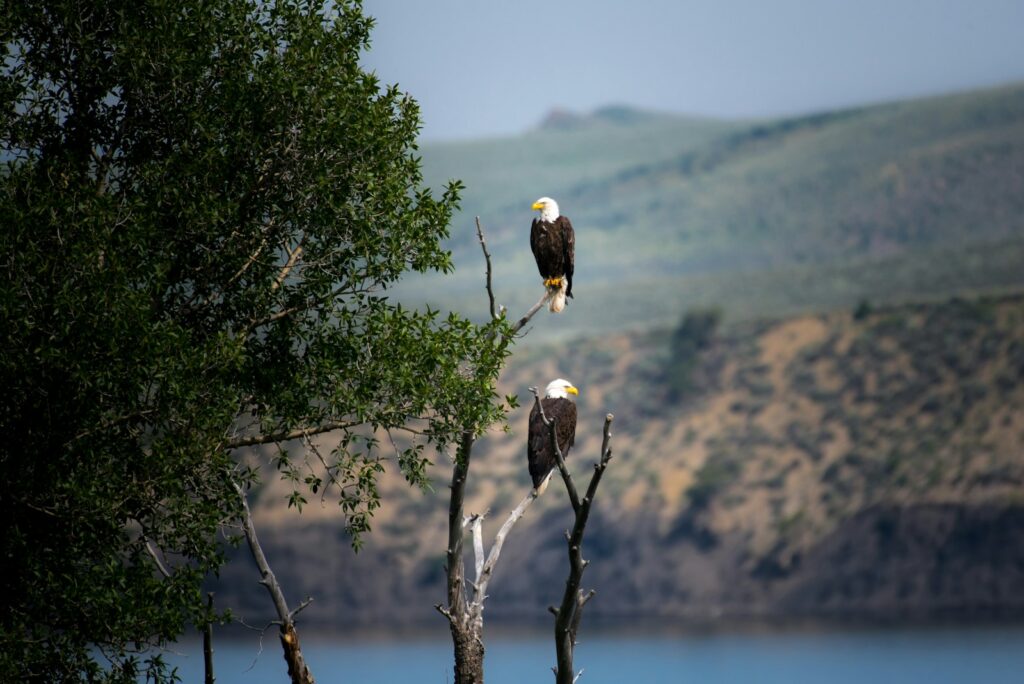
The return of bald eagles to their ancestral nesting grounds represents one of the most inspiring wildlife comeback stories in American history. From the brink of extinction, with just a few hundred breeding pairs remaining in the continental United States, these iconic birds have reclaimed territories abandoned generations ago. Their recovery demonstrates the remarkable resilience of nature when given adequate protection and habitat. As eagles continue to adapt to our changing landscape – even establishing territories in urban areas their ancestors would have avoided – they offer powerful lessons about conservation, adaptation, and coexistence. While challenges remain, the sight of bald eagles soaring over waterways where they were absent for decades serves as a living reminder that dedicated conservation efforts can reverse even seemingly hopeless wildlife declines. Their return to old nesting grounds isn’t just an ecological victory – it’s a testament to what we can accomplish when we commit to protecting our natural heritage.