

The magic of dawn unveils nature’s most spectacular light show, transforming landscapes with golden hues and long shadows that photographers and early risers cherish. America’s national parks offer some of the most breathtaking sunrise views on the planet, where mountain peaks, vast canyons, and serene waters become canvases for the morning light. These precious moments before the day begins provide a unique opportunity to experience these protected lands in their most tranquil state, often with fewer visitors and wildlife beginning to stir. Whether you’re planning your next outdoor adventure or simply dreaming of natural wonders, these national parks offer sunrise experiences that will forever change how you perceive the beginning of a new day.
Grand Canyon National Park: Nature’s Masterpiece at Dawn
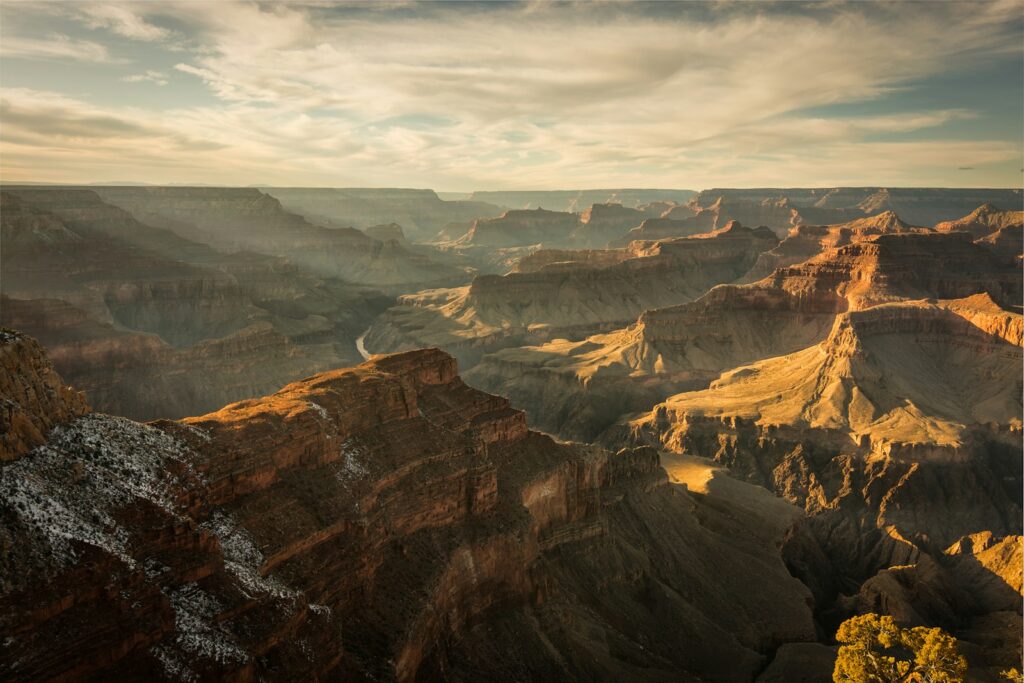
The Grand Canyon transforms dramatically as first light spills over its eastern rim, gradually illuminating the layered rock formations with an ever-changing palette of reds, oranges, and purples. Mather Point offers perhaps the most accessible premium viewing spot, where visitors can watch as darkness recedes and the Colorado River begins to glimmer far below. The play of light and shadow across the canyon’s vast expanse creates an almost three-dimensional effect, revealing geological features that remain hidden during other times of day. For the most memorable experience, arrive at least 30 minutes before official sunrise time to secure a viewing spot and witness the gradual transformation from darkness to the full glory of daybreak.
Acadia National Park: First Light in America
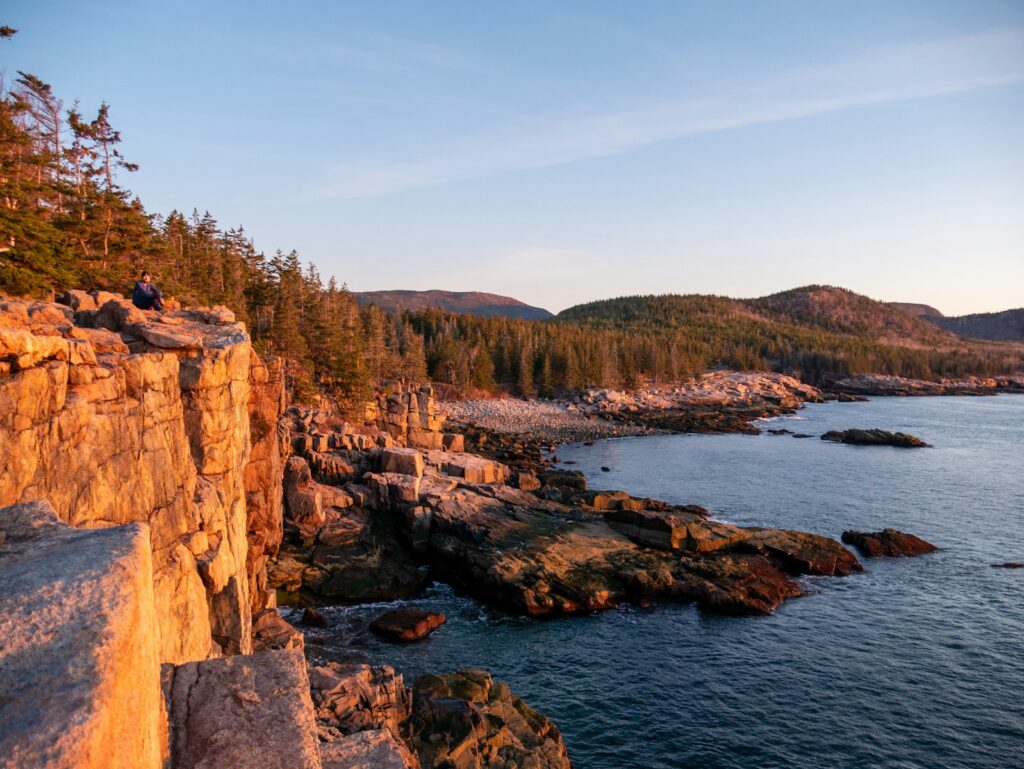
As the easternmost national park in the United States, Acadia often receives the country’s first rays of sunlight, making it a symbolic and spectacular place to greet the dawn. Cadillac Mountain, the highest point on the North Atlantic seaboard, draws early risers who make the trek to its 1,530-foot summit where, from October through March, visitors witness the first sunrise in the entire country. The panoramic views encompass the Porcupine Islands dotting the bay, the town of Bar Harbor, and on clear mornings, a vast expanse of the Atlantic Ocean turning from inky black to shimmering gold. The pink granite formations that characterize the park take on a warm glow during these early hours, creating a photographer’s paradise of textures and colors.
Haleakalā National Park: Above the Clouds in Maui
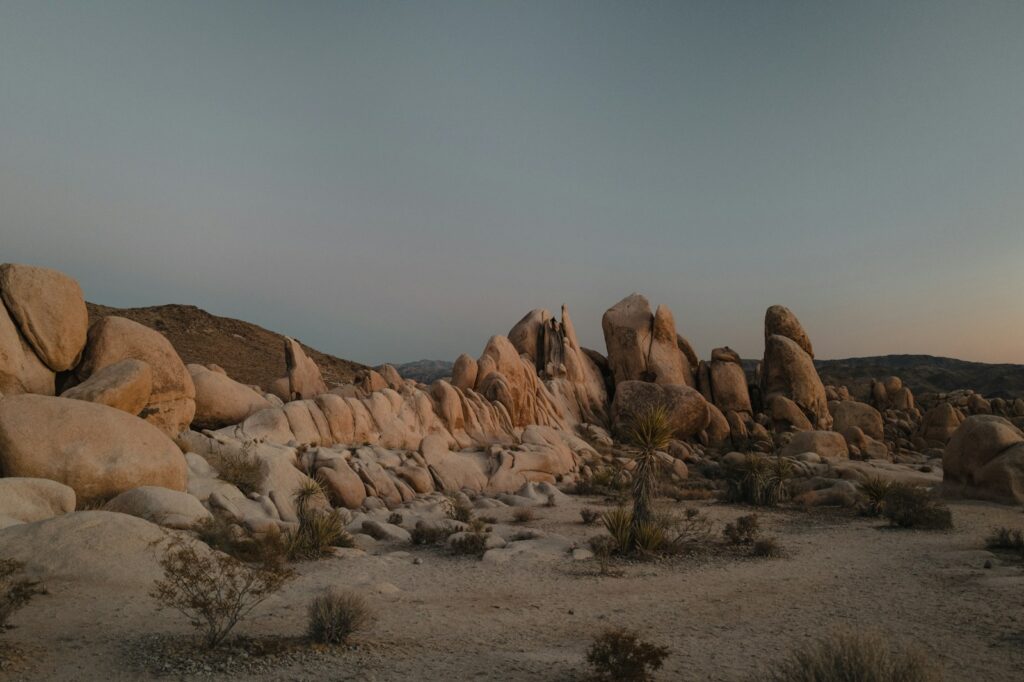
The name “Haleakalā” means “house of the sun” in Hawaiian, and witnessing dawn from this massive shield volcano’s summit proves why this name is so fitting. At 10,023 feet above sea level, visitors stand above a sea of clouds as the sun emerges from the Pacific horizon, creating one of the most otherworldly sunrise experiences in the national park system. The crater’s colorful volcanic landscape of cinder cones and lava formations takes on an almost Martian appearance as it’s gradually revealed by the morning light. The temperature at this elevation can be surprisingly cold (often in the 30s°F), so those making the pre-dawn journey should dress warmly and prepare for strong winds that often accompany this magical experience.
Yellowstone National Park: Geothermal Wonders in Morning Light
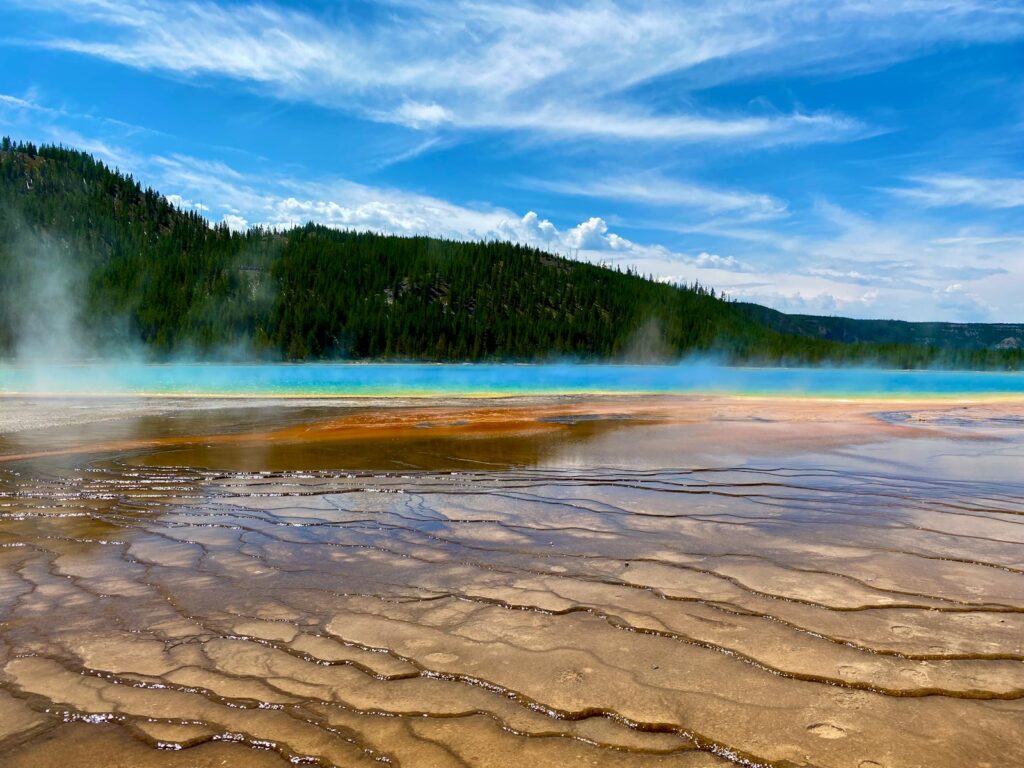
Yellowstone’s geothermal features create unique sunrise opportunities where morning light interacts with rising steam to produce ethereal scenes unlike anywhere else on Earth. The Grand Prismatic Spring becomes particularly mesmerizing at dawn as sunlight filters through its steam clouds, creating rainbow prisms above the already colorful bacterial mats surrounding the spring. Early mornings in the Lamar Valley not only offer beautiful light across the expansive landscape but also provide the best opportunity to spot wildlife like wolves, bears, and herds of bison emerging from the morning mist. The Hayden Valley similarly transforms at sunrise, with fog often hovering just above the Yellowstone River before being burned away by the ascending sun.
Rocky Mountain National Park: Alpine Glow on Majestic Peaks
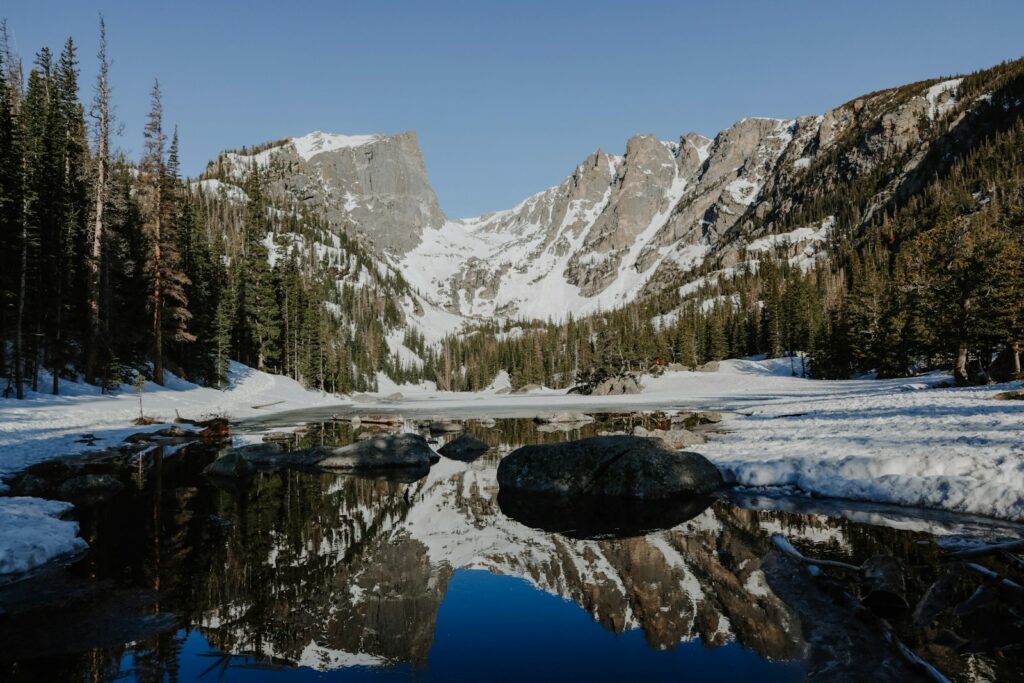
The phenomenon known as “alpine glow” reaches its peak expression in Rocky Mountain National Park, where the first rays of sunlight paint the snowcapped mountains with vibrant pink and orange hues before the valleys below receive any light. Trail Ridge Road offers several magnificent vantage points, including Forest Canyon Overlook and Rainbow Curve, where early risers can watch as the light gradually descends from the highest peaks down to the forests and meadows below. Many Lakes Overlook lives up to its name during sunrise, when still waters create perfect reflections of the illuminated peaks, effectively doubling the visual impact of this spectacular light show. The park’s eastern side typically offers better sunrise viewing, with Many Parks Curve providing a panoramic vista where visitors can watch the sun emerge over the plains and gradually light up Longs Peak and the Continental Divide.
Bryce Canyon National Park: Hoodoos Ablaze at Dawn
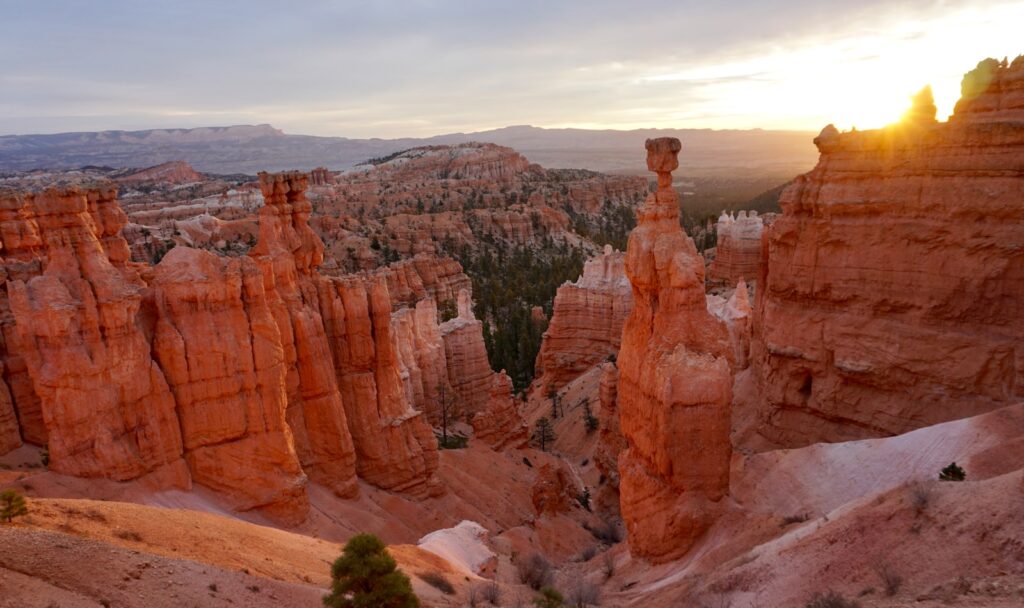
The thousands of delicate spires known as hoodoos that fill Bryce Canyon create one of the most photogenic sunrise settings in the entire national park system. As first light strikes these orange, pink and white limestone formations, they appear to catch fire, glowing with an intensity that seems to come from within the rock itself. Sunrise Point (aptly named) and Bryce Point offer the most dramatic views, with the latter providing a higher, more panoramic perspective where visitors can watch the light slowly fill the amphitheater below. The changing angle of the sun throughout the first hour of daylight continuously transforms the appearance of the hoodoos, creating new shadows and highlighting different features with each passing minute.
Great Smoky Mountains National Park: Misty Mountain Mornings
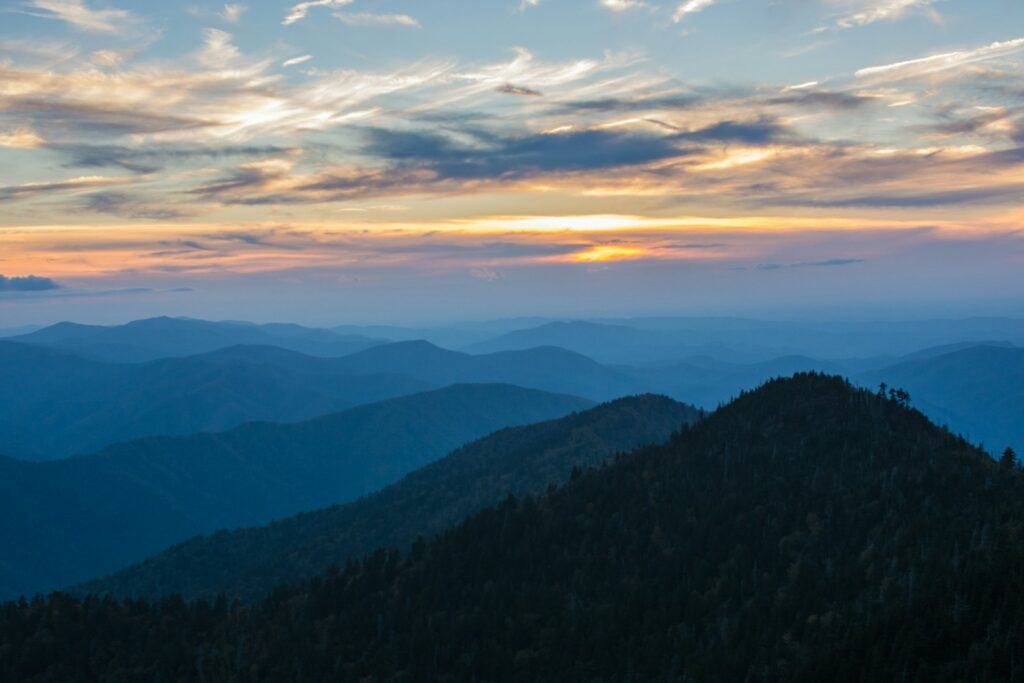
The very name of this park hints at its signature dawn experience, when cool morning air creates the namesake smoke-like mist that swirls through valleys and around mountainsides. Clingmans Dome, the highest point in the park at 6,643 feet, offers a spectacular 360-degree viewing platform where early risers can watch the sun emerge above a rolling sea of fog that blankets the lower elevations. Newfound Gap, straddling the Tennessee-North Carolina border, provides another excellent vantage point where the layered mountain ridges become increasingly distinct as sunlight gradually burns through the morning haze. During autumn, these sunrise views become even more spectacular as the fog weaves through valleys filled with red, orange, and yellow foliage, creating a tapestry of color that seems to change by the minute.
Arches National Park: Desert Architecture Illuminated
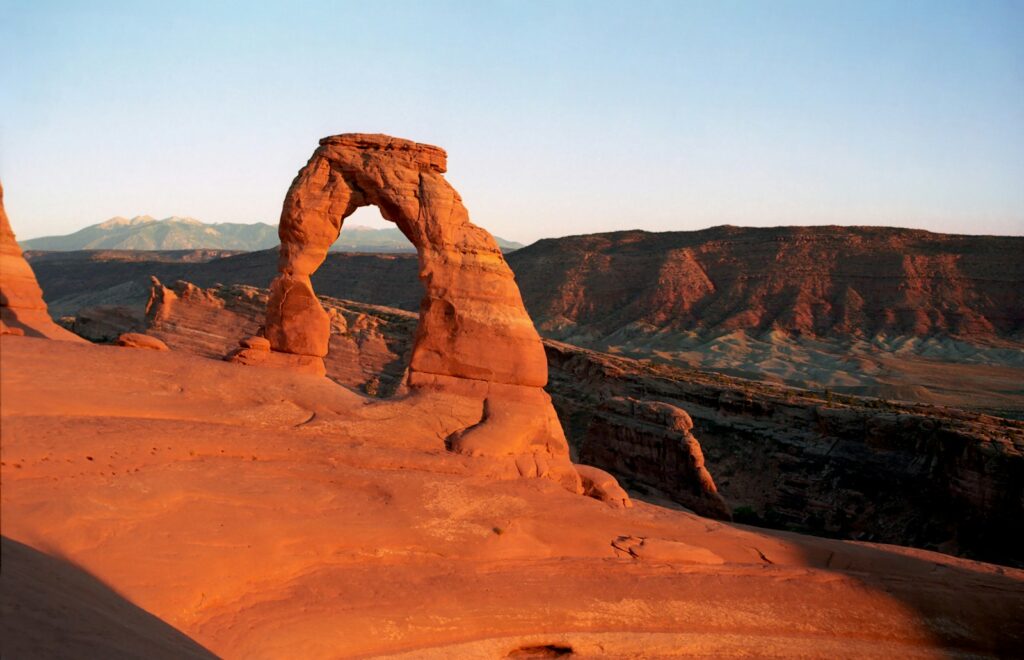
The delicate natural stone arches and massive sandstone formations of this Utah park undergo a remarkable transformation as dawn breaks over the desert landscape. Mesa Arch offers perhaps the most famous sunrise view, where early morning light streams through the arch, illuminating its underside with a fiery glow that frames the distant La Sal Mountains. Photographers often arrive hours before dawn to secure a prime position at this relatively small but spectacular viewpoint. The Windows Section provides another excellent sunrise location, where first light dramatically outlines the North and South Windows and Turret Arch against the gradually brightening sky. The park’s red rock features become particularly vibrant during the “golden hour” just after sunrise, when the low-angle light accentuates every texture and contour in the sandstone.
Glacier National Park: Alpine Majesty at First Light
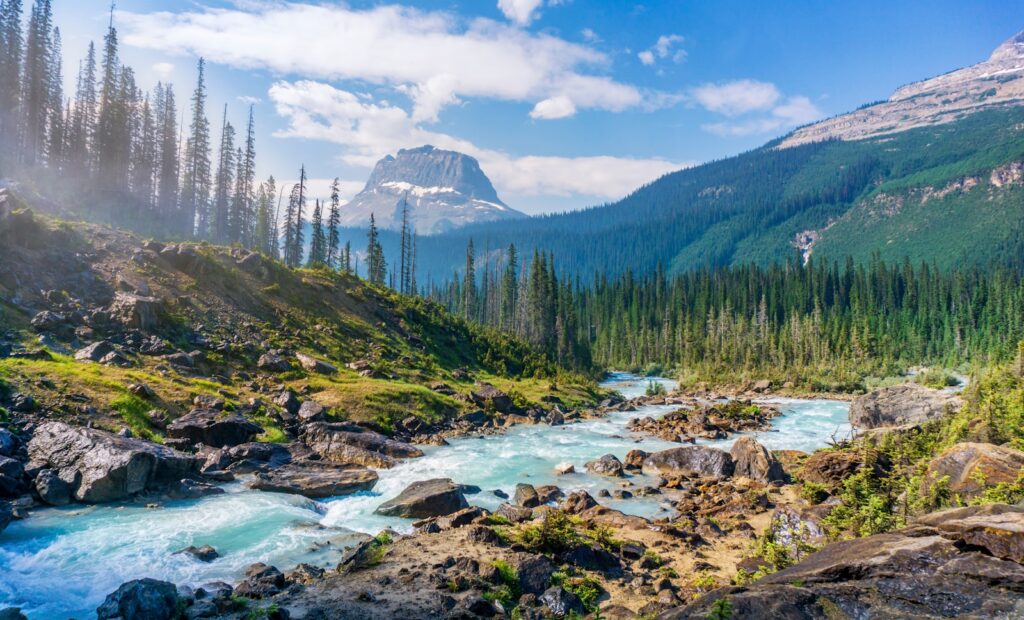
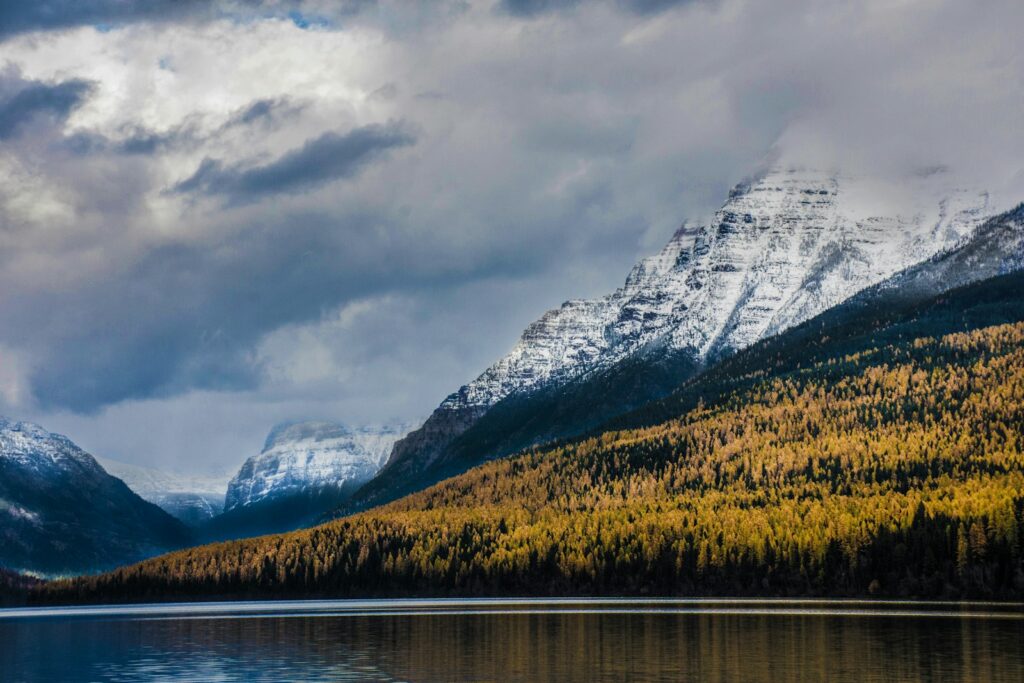
The jagged peaks and pristine lakes of Glacier National Park create some of the most dramatic sunrise landscapes in North America, particularly when viewed from the park’s legendary Going-to-the-Sun Road. St. Mary Lake offers one of the most iconic sunrise views, where Wild Goose Island provides a perfect focal point as the surrounding mountains catch the first golden rays of daylight. Many Glacier Valley presents another stunning location, where the still waters of Swiftcurrent Lake create perfect reflections of Mount Grinnell and the surrounding peaks as they’re bathed in morning light. During the summer months, wildflower meadows add splashes of color to these already spectacular scenes, with beargrass, Indian paintbrush, and alpine sunflowers catching the first light alongside the mountains.
Mount Rainier National Park: Volcanic Majesty in Morning Alpenglow
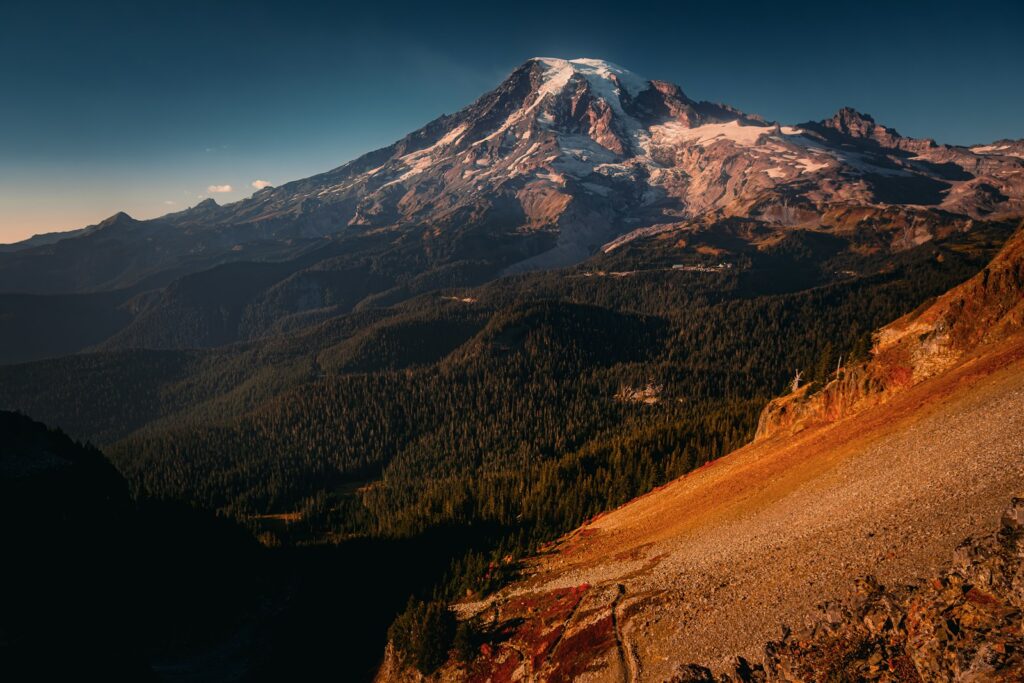
The massive snow-covered dome of Mount Rainier dominates the landscape of this Washington park, and sunrise transforms this sleeping volcano into a beacon of pink and gold light visible for miles around. Reflection Lakes offers one of the most photogenic sunrise spots, where the mountain’s illuminated peak perfectly mirrors in the still waters on clear mornings. Sunrise Point (reaching it requires the aptly-named Sunrise Road) provides a higher-elevation perspective at 6,400 feet, where visitors can watch alpenglow spread across the mountain’s glaciers and surrounding peaks of the Cascade Range. During wildflower season in late July and August, the colorful meadows of Tipsoo Lake and Paradise add vibrant foregrounds to these already spectacular mountain sunrise views.
Death Valley National Park: Desert Dawn in the Lowest Place in North America
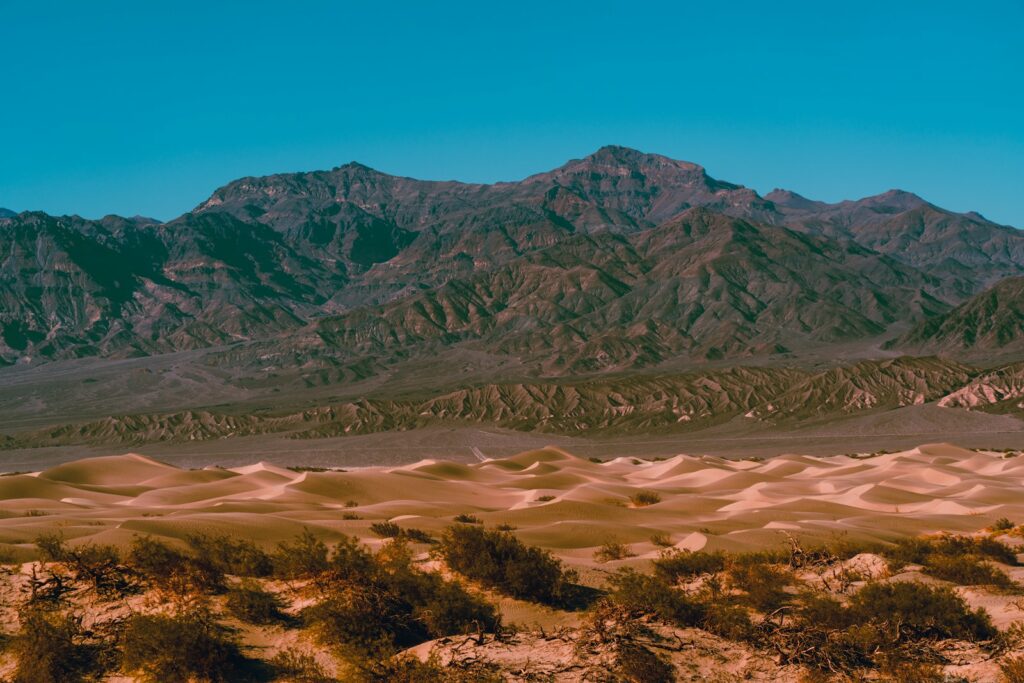
Despite its ominous name, Death Valley offers some of the most vibrant and colorful sunrise experiences in the park system, particularly during the cooler months from November through March. Zabriskie Point provides a panoramic view of eroded badlands that transform from shadowy formations to vibrant gold and ochre landscapes as the sun climbs above the Funeral Mountains to the east. Dante’s View, at 5,575 feet above the valley floor, offers a truly spectacular sunrise perspective where visitors can watch light gradually fill the vast basin while illuminating the salt flats of Badwater Basin, 282 feet below sea level. The Mesquite Flat Sand Dunes become particularly magical at dawn, when low-angle light creates dramatic shadows across their rippled surfaces and footprints from the previous day remain pristine before new visitors arrive.
Olympic National Park: Where Mountains Meet the Sea at Dawn
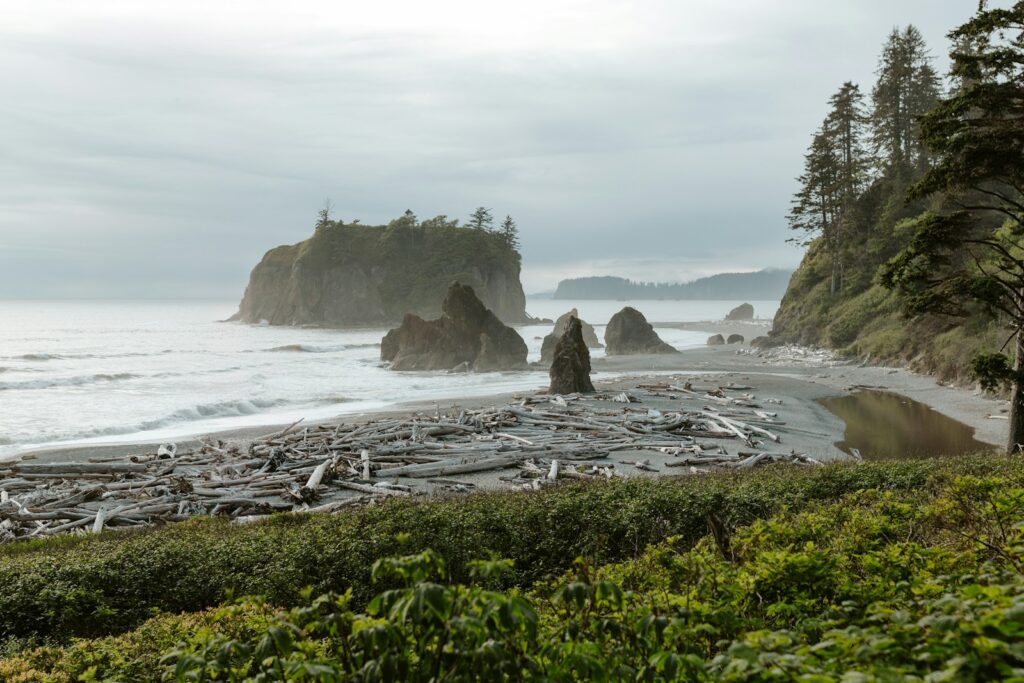
The remarkable diversity of Olympic National Park creates multiple distinct sunrise experiences within a single protected area, from alpine peaks to wild coastlines. Hurricane Ridge offers breathtaking views of the Olympic Mountains catching first light, with the Strait of Juan de Fuca and sometimes even Canada visible in the distance on clear mornings. Along the park’s rugged coastline, Rialto Beach provides dramatic sunrise scenes where sea stacks and offshore islands emerge from the morning mist as waves crash against driftwood-strewn shores. For a completely different experience, the Hoh Rain Forest becomes particularly magical during early morning hours when sunlight filters through the mist and illuminates mosses and ferns with an ethereal glow. The park’s remarkable ecological diversity means that visitors can experience multiple distinct sunrise environments within a single day’s journey.
Tips for Capturing the Perfect National Park Sunrise
Experiencing these magnificent national park sunrises requires preparation, particularly since many of the best viewing locations involve pre-dawn arrivals when services may be limited or unavailable. Always check precise sunrise times for your specific location, as mountain ranges and other features can delay the actual appearance of the sun compared to published times for nearby towns. Dress in layers, as pre-dawn temperatures can be surprisingly cold even in desert environments, and bring a headlamp with a red light setting to navigate to viewpoints without disrupting your night vision or disturbing other visitors. For photographers, arrive early enough to scout compositions in the dark, bring a sturdy tripod for the low-light conditions, and consider using graduated neutral density filters to balance bright skies with still-dark foregrounds. Remember that while the moment of sunrise itself is spectacular, the changing light continues to create magical conditions for at least 30-60 minutes afterward, so plan to linger and witness the full progression of the dawn experience.
The national parks of America offer windows into some of nature’s most magnificent moments, and perhaps none are more moving than witnessing the birth of a new day across these protected landscapes. From the mist-shrouded mountains of the Smokies to the fiery hoodoos of Bryce Canyon, each sunrise experience offers not just spectacular visuals but a profound connection to the rhythms of the natural world. These moments remind us why these lands were set aside for protection in the first place – to preserve not just geological features or ecosystems, but the transformative experiences they provide. Whether you’re a dedicated photographer or simply someone seeking natural wonder, witnessing a national park sunrise might just be the most rewarding reason to ever set an early alarm.